September 29th, 2016 · No Comments
Owls Next Door…. by Jane St. Clair
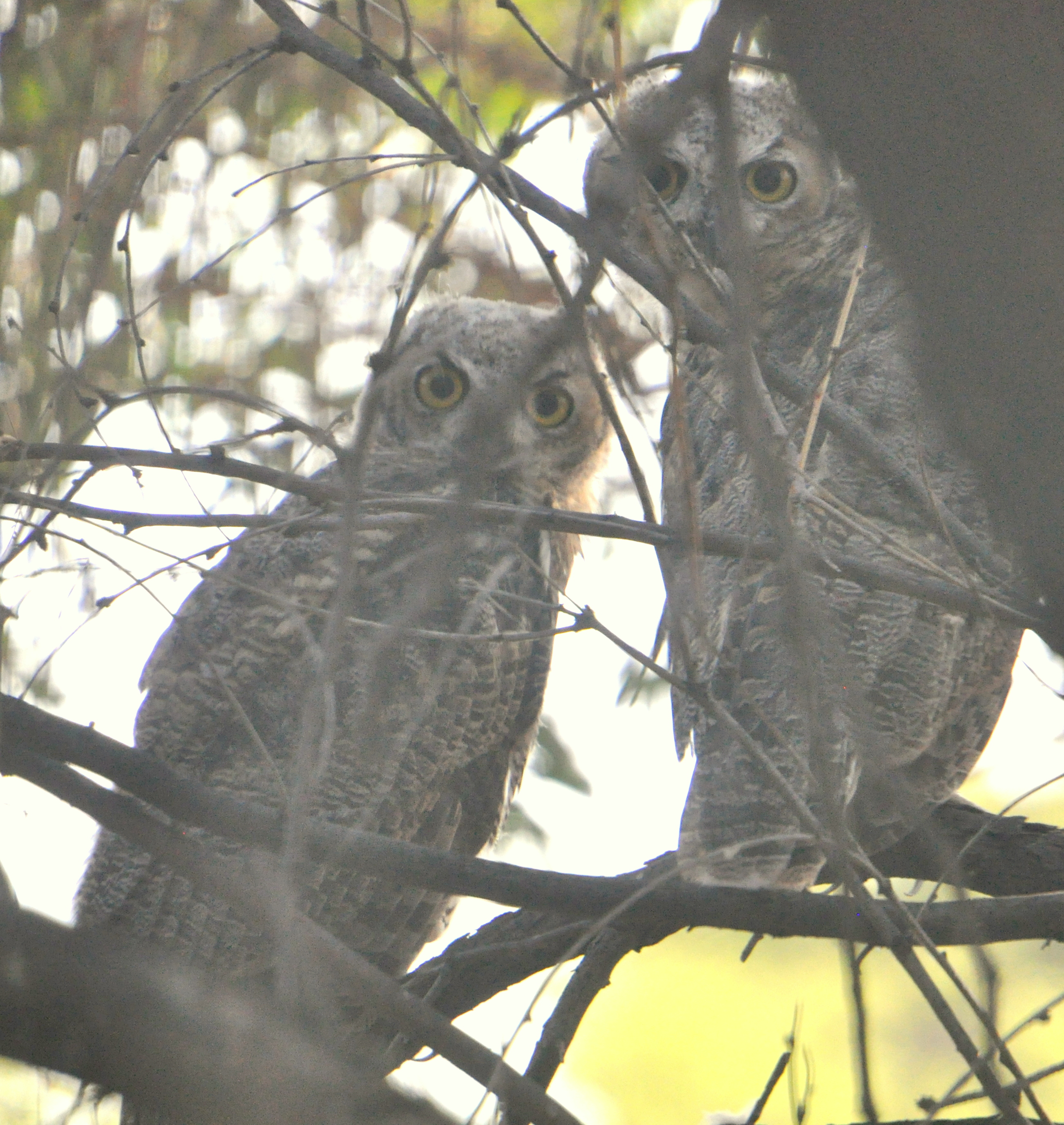
One morning –very early–for it was dawn and dark outside– I saw two strange birds outside my window. I could see only their silhouettes which were enormous as birds go. At first I thought they were hawks, but their heads were too big, and their bodies too square and chunky. Then I thought they were vultures, but they did not have hunched shoulders. They were roosting high up in the tree next door, but not near a nest.
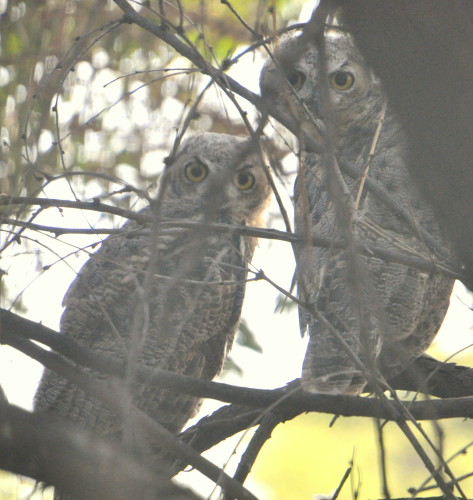
As the dark light changed into yellow sunrise, I could make them out better. Not only did they have enormous bodies, they also had enormous heads with tufted ears and big round yellow eyes. They stared back at me in this patriarchal way, as if I were a court clown annoying a pair of kings.
I had never seen owls this big before. When we lived along the Ohio River, we often saw a family of owls but they were funny little creatures — a gray mama with her five white babies that lined up in a row and turned their heads back and forth as they said “who who who.” They had a sweet energy about them and reminded me of that nursery song, “‘Sing,’ said the mama, ‘Sing if you can,’ and they sang and they sang all over the dam.”
But the owls next door are different.
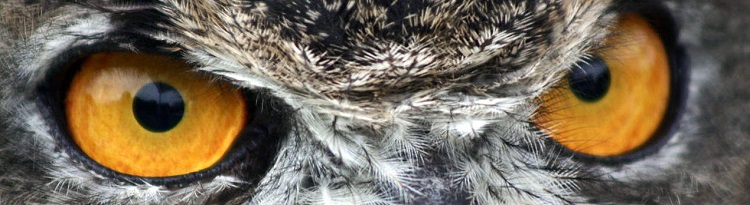
They stare back at me as if they wish I’d fly away. They stare with those eyes — oh! those yellow eyes! and those big straight eyebrows that tilt up, as if they’re making strategies for Wall Street. And they have these enormous muscular legs –with fierce claws mean enough to carry off a cat or a small dog!
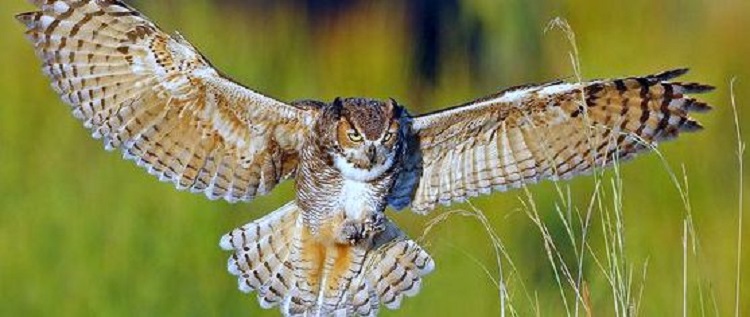
The owls next door are there every morning, staring back at me. Some days I see not two but four of them! Between them they have enough fierce energy to take on Patton’s Army! They have a name: Great Horned Desert Owls. They are predatory creatures of the night, and they are at their deadliest when the sun goes down. Once I was able to watch one of them zero on a little rodent with those terrible swift eyes and then –with all the pressure, purpose and precision of a high-tech drone– he angled down and grabbed that rat.
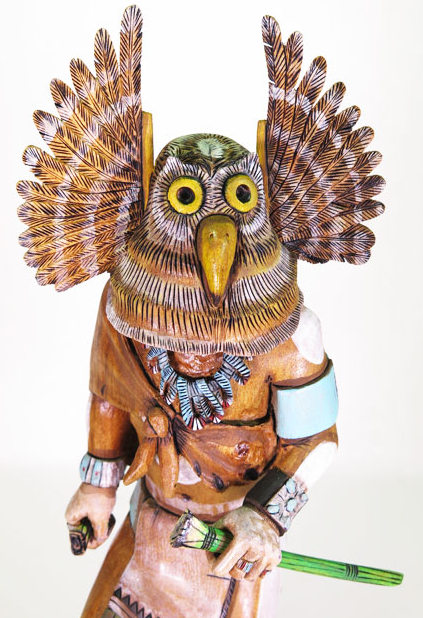
The Native American tribes here near Tucson respect the owl kingdom very much –in fact, some even say owls are harbingers of death. In some legends owls are a channel between this world and the world to come.
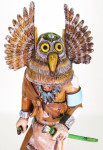 Albert Einstein wrote, “The most incomprehensible thing about the universe is that we can comprehend the universe.” I think he meant we can understand physics in terms of numbers and formulas and pi’s written in white chalk marks on never-ending blackboards. But what is just amazing to me is that we can understand and relate to strange creatures like Great Horned Owls in the way all living things understand one another, even though our lives are quite different.
Isn’t that wonderful? Isn’t that the most incomprehensible thing?

Check out more nature essays about animals of the Arizona Sonoran Desert at Hail Coyote Nation and The St. Croix Cougar Belongs to the West. Jane’s nature essay “Nowhere Near” appears in the 2016 Fall issue of Ruminate magazine. Literative posted Jane’s award-winning story “Roadkill” on their website.
Tags: Arizona · nature essay · owls
by Jane St. Clair
The Nature Conservancy’s beautiful Ramsey Canyon is where Tucson people go to escape the heat …
People ask us here in Tucson,
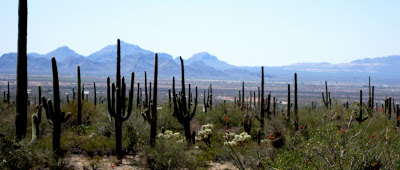
“How do you stand the 110 degree summer heat? “
We desert rats think to ourselves,”What wimps for asking!” …
… yet our polite answer is, “We go up to the High Country!”
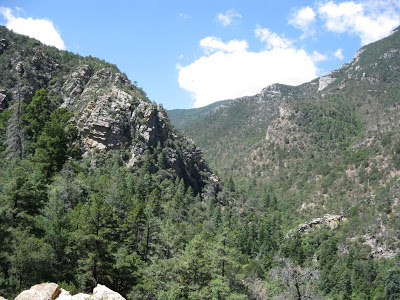
Arizona High Country is only a few hours out of town. One nice place in High
Country is Ramsey Canyon, world-known for gorgeous hummingbirds
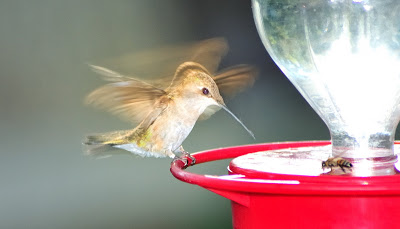
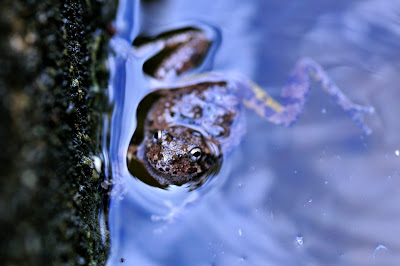
And dorky looking frogs.
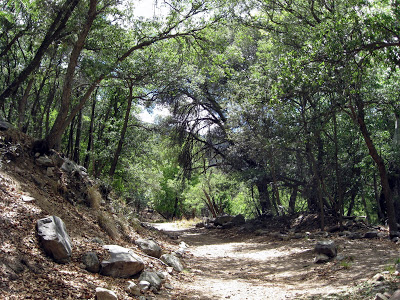
The Ramsey Canyon trail is steep and uphill, but worth it for the view. The
country is a mix of desert and mountain pine, because it is where the
Sonoran desert meets the Rocky Mountains.
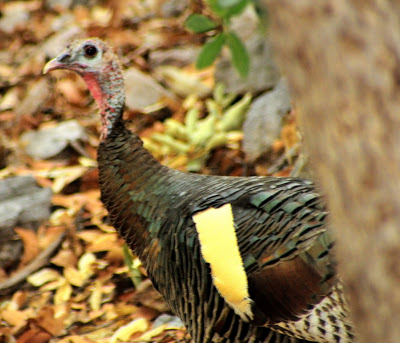
About half-way up I see a mama turkey with six babies. I did not know
that turkey babies climb up Mama Turkey’s back for rides.
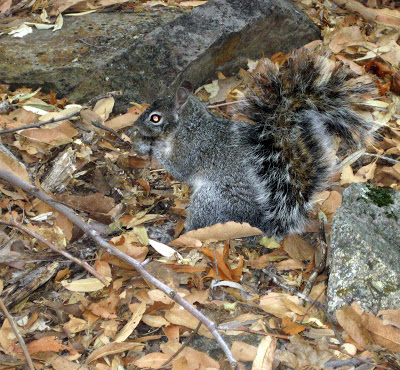
I make friends with a squirrel. He jumps around in Shakespearian iambic
pentameter …
Under the Greenwood tree …
who loves to lie with me …
Here shall we see no enemy
but winter and rough weather …
Da Dum da dum da dum da dum…
I forget that the Canyon has bears and puma and I take the colors of
the many greens and the sweet way the trail winds.
I watch a spider happily at work.
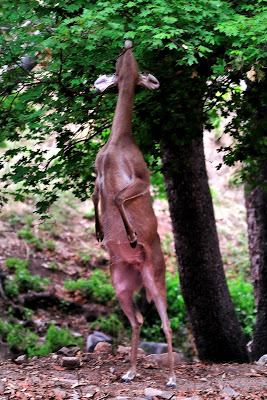
And I spot a gentle deer in the meadow, and watch him as
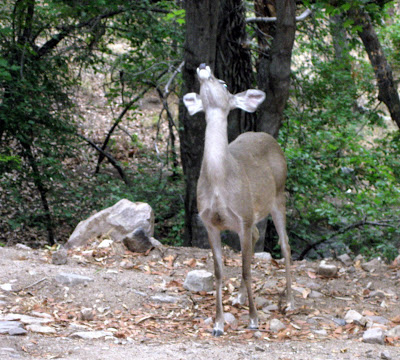
he leaps like a springer spaniel to eat some leaves.
I follow him into tall grass,
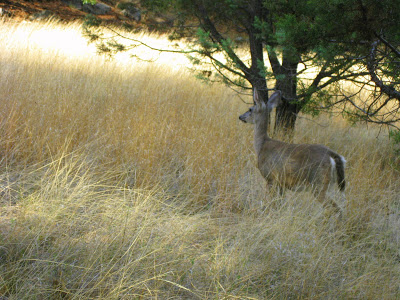
all the time all spaced out watching him, all rapturous like St John of the Cross
wrote,
I was so caught up and rapt away,
In such oblivion immersed,
That every sense and feeling lay
Of sense and feeling dispossessed;
I do not notice a coiled-up rattler at my feet —
his hissy sound like water rustling —
his mean little hooded eyes —
and his awful open serpentine mouth!
YIKES! Run away!
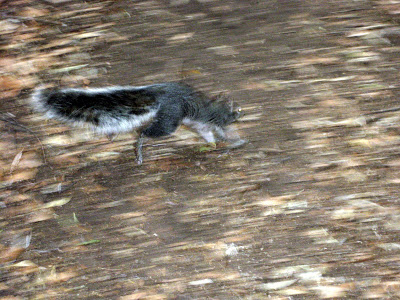
Suddenly formerly friendly forest is forebodding!
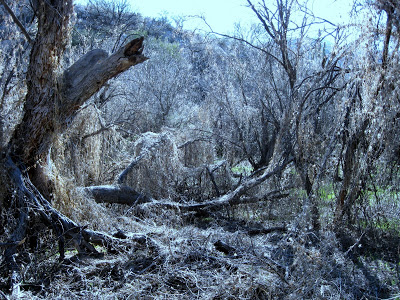
Every tree looks like a monster!
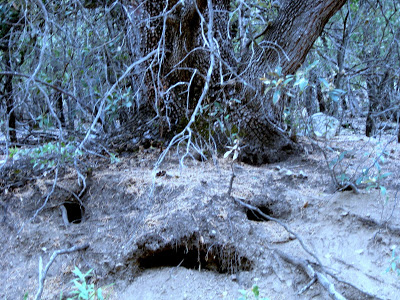
Friend-squirrel stops to eat; he knows my mind is playing forest tricks
on me. He also knows I stepped on the snake first.
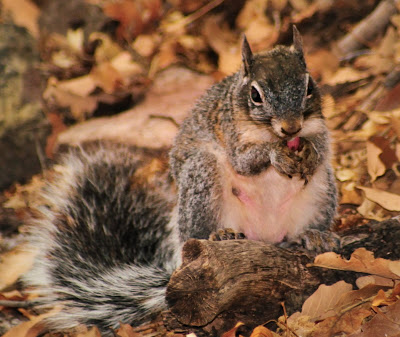
Did St John ever get so spaced out that a rattler snapped at him? I think
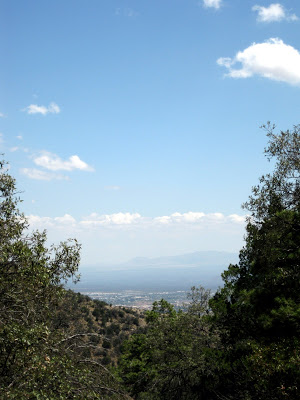
about that as I wander up to the top of the mountain and watch
civilization below. I take it in, no longer thinking, just feeling the
transcendental experiences St John knew so well:
I entered – where – I did not know,
Yet when I found that I was there,
Though where I was I did not know,
Profound and subtle things I learned;
Nor can I say what I discerned,
For I remained uncomprehending,
All knowledge transcending.
It is time to leave, but in the new stillness of my heart,
I know that I will come back to High Country sometime soon.
Jane St. Clair’s very short story,“Roadkill,” won Literative’s July 2016 Contest.
Tags: Arizona photography · Jane St. Clair · nature essay
by Jane St. Clair
The Arizona Jackalope
I’ve never seen an Arizona Jackalope myself but then, Arizona Jackalopes are quite rare. Part of the reason is they only mate during lightning strikes in monsoon season.
Common jackalopes, sometimes called warrior rabbits, are native to Wyoming, New Mexico, Nebraska and Colorado. They aren’t the same as Arizona Jackalopes.
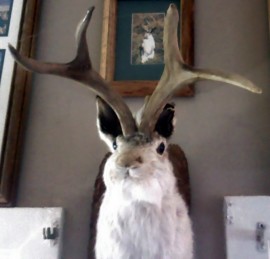
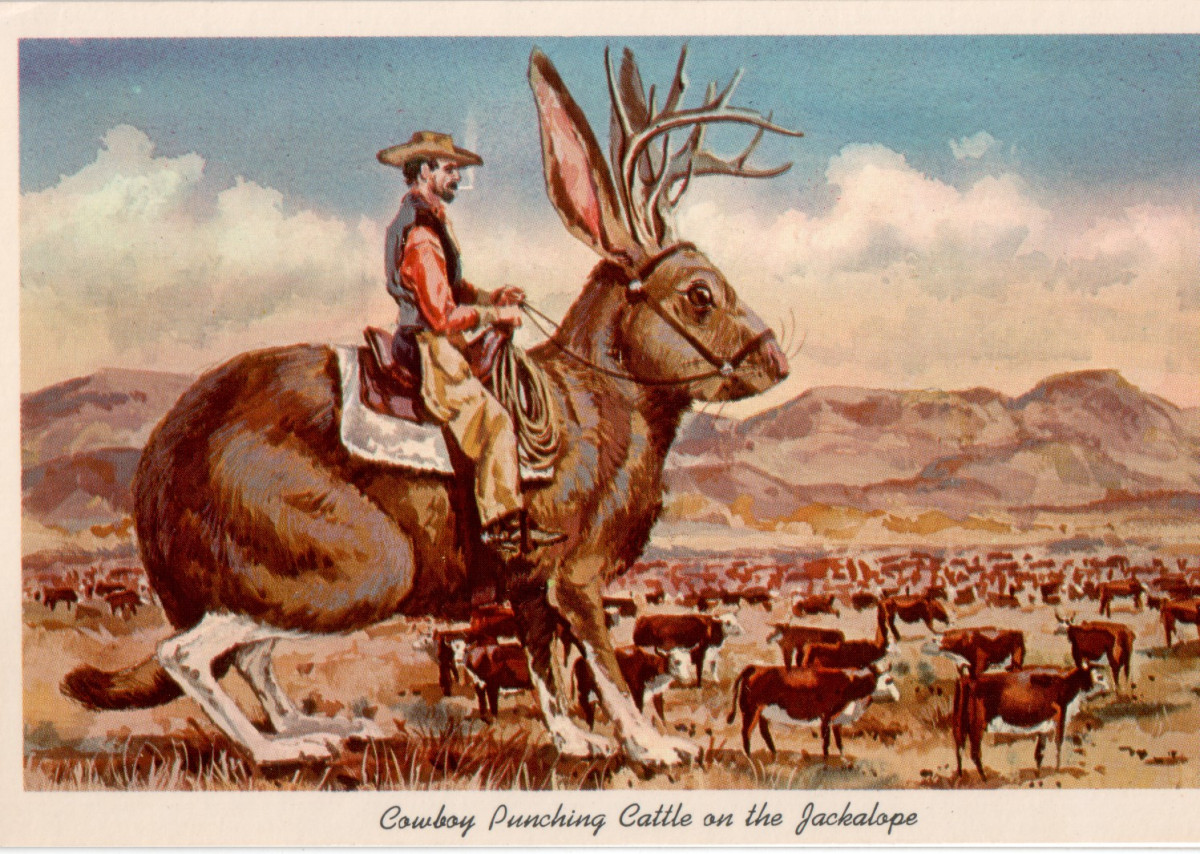
Common jackalopes look like huge rabbits with antlers. They’re extremely mean and fierce. The Arizona jackalope is much bigger than the common jackalope, who only grow to be about two feet tall. Ours are at least eight feet tall and weigh well over 1200 pounds.
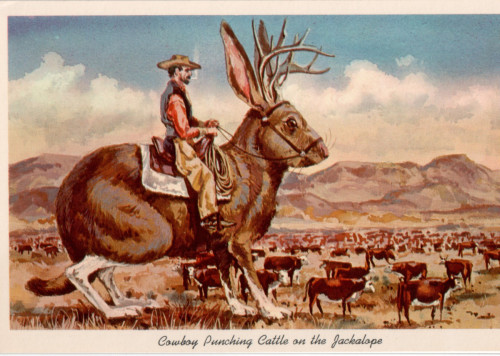
Back in the Old West, Arizona cowboys rode jackalopes, especially during round-ups, because they proved to be more durable than horses.
You can catch jackalopes by putting whiskey out for them, their favorite drink. Once your jackalope is drunk, he’ll move slowly and unsteadily, and therefore he’ll be easier for you to trap, although it will still be very hard to do. The problem with capturing jackalopes is they can use language. They’re known to yell, “He’s over there!” in order to throw you off track when you are trying to catch them.
The Arizona Jackalope is an endangered species. However, the little bitty ones in other Western states are not. In fact, you can still get a hunting license for the Wyoming Jackalope, although their hunting season is restricted to June 21st between the hours of midnight and 2 A.M.
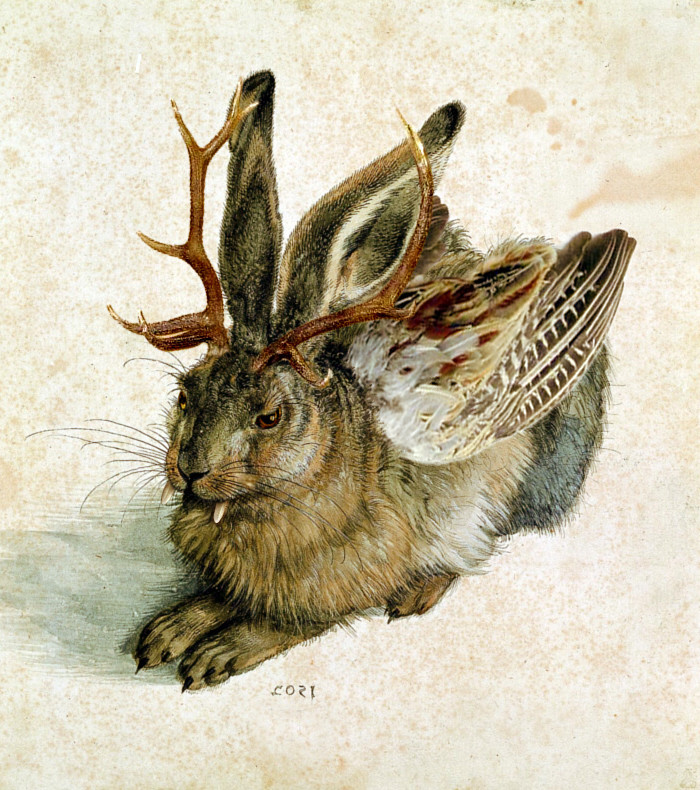
Jackalopes are probably related to wolpertingers.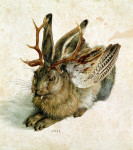
Wolpertingers are a German species that also look like rabbits with antlers, except wolpertingers usually have feathered wings. Another distant cousin to jackalopes is the Swedish skvader, a cross between a rabbit and a grouse.
The Arizona Sand Shark
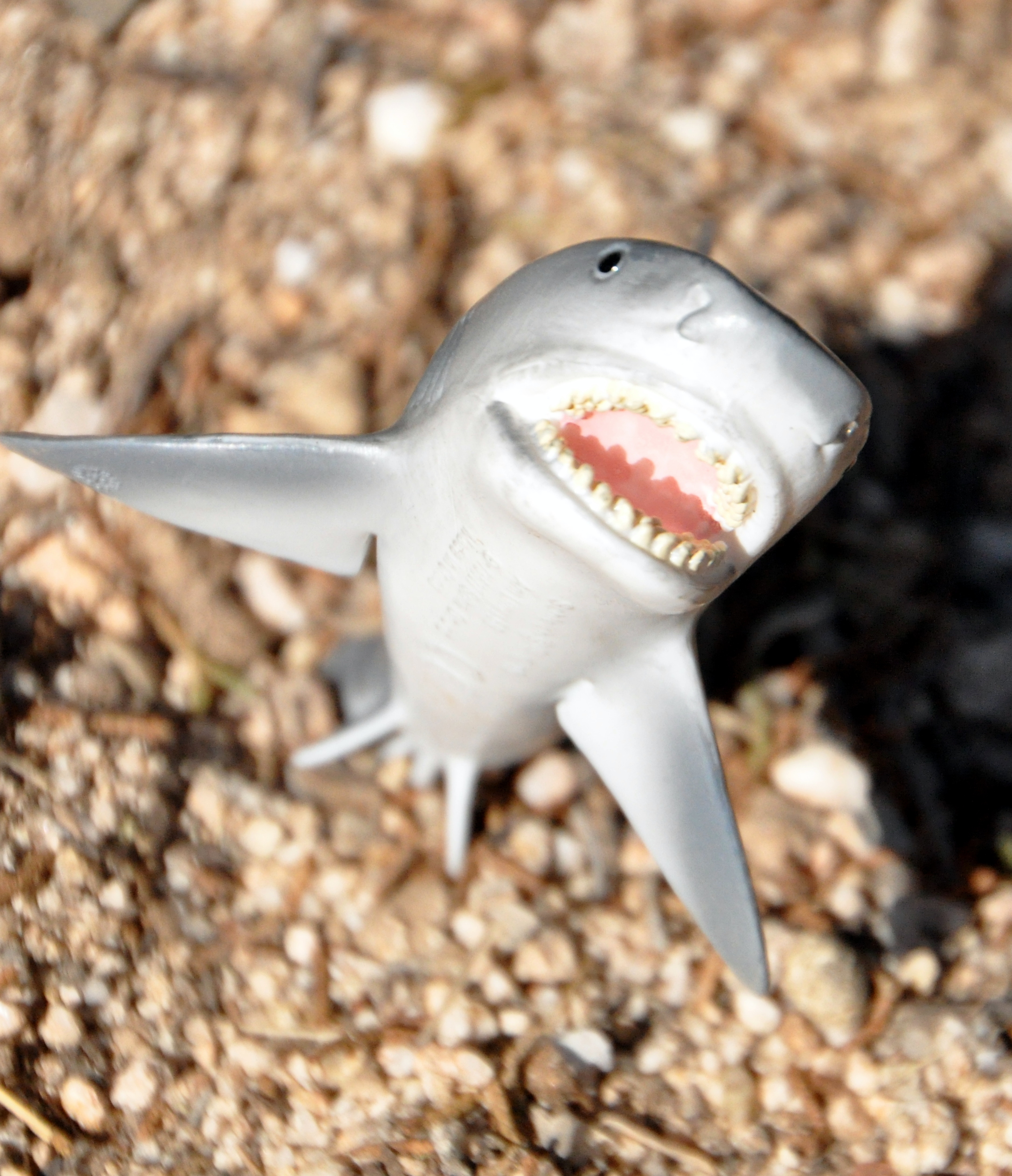
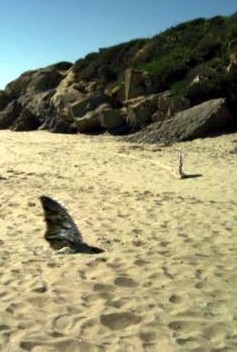 Arizona Sand Sharks are often confused with California Sand Sharks, even though they are two distinct species. The main difference is since Arizona has no ocean, our Sand Sharks swim only in washes and rivers, which are dry most of the year. Arizona Sand Sharks have adapted to land, but they can only live without water for a few days.
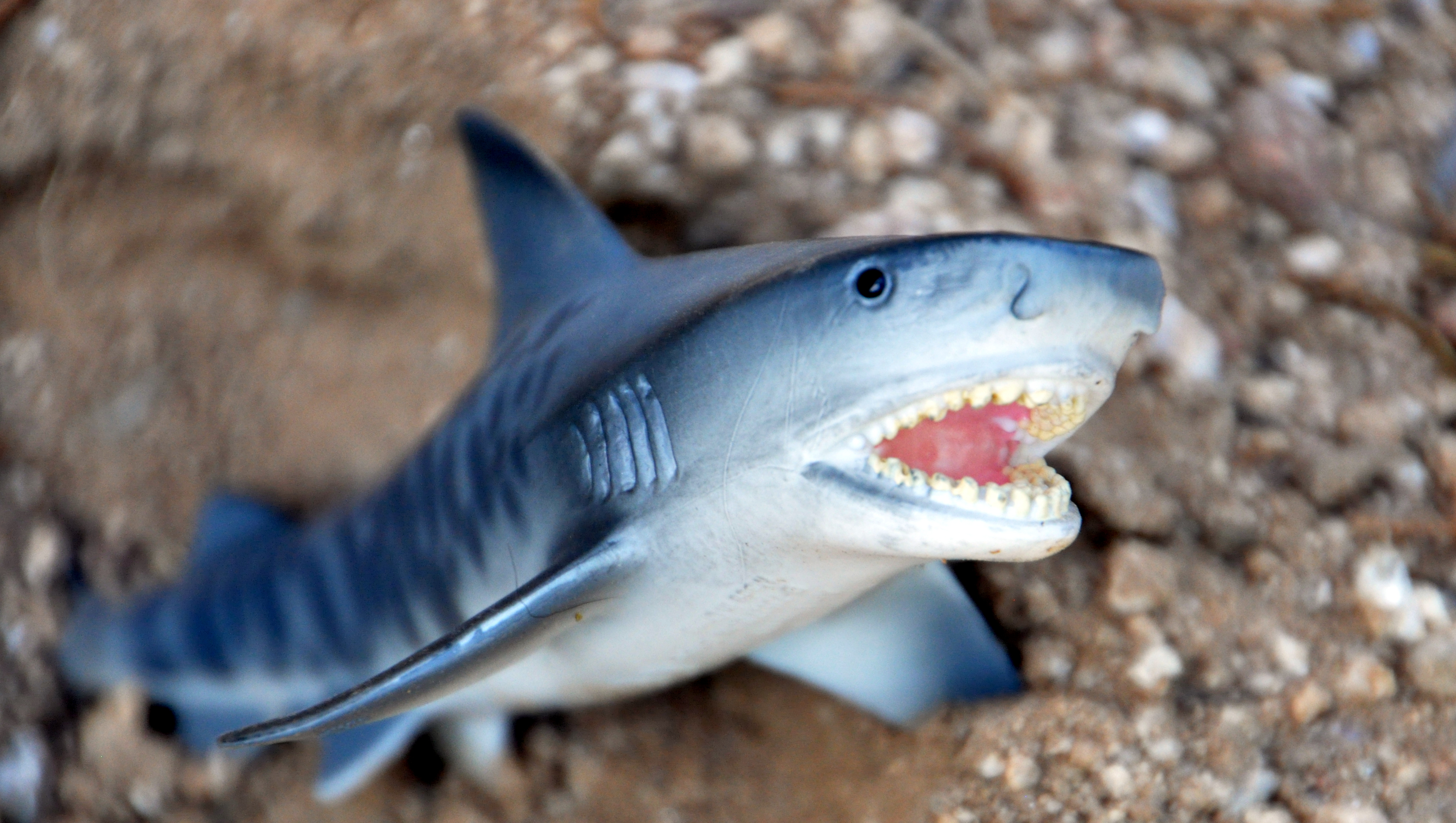
Arizona Sand Sharks are deadly to humans, so it’s important to remain at least three bus-lengths away from them. As you can see, our Sand Sharks have rows and rows of lethal teeth as sharp as a new Bowie knife.
(It was very dangerous to get this picture for you.)
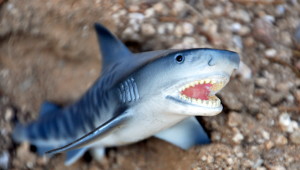
(Especially when he jumped up for an attack!)
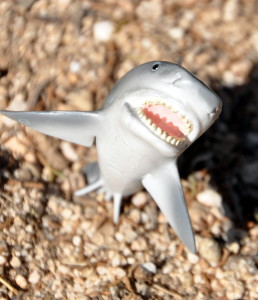
You’ll only see Arizona Sand Sharks after a desert wash or a dry desert river fills up during monsoon season.
 On the other hand, California Sand Sharks are very common. They often scoot along beaches, terrifying everyone in sight. By the way, beach balls look exactly like seals’ eggs to California Sand Sharks. Since seals’ eggs are California Sand Sharks’ favorite food, this means you have to be particularly alert when you’re playing beach volleyball.
In 2012 a horror movie called “Sand Sharks” went straight to video, becoming an instant classic among those of us who love these amazing animals.

For more silly Arizona posts, see How to Resuscitate a Lizard and Grifting Along with the Tumbling Tumbleweed.
Tags: Arizona · Humor
by Jane St. Clair
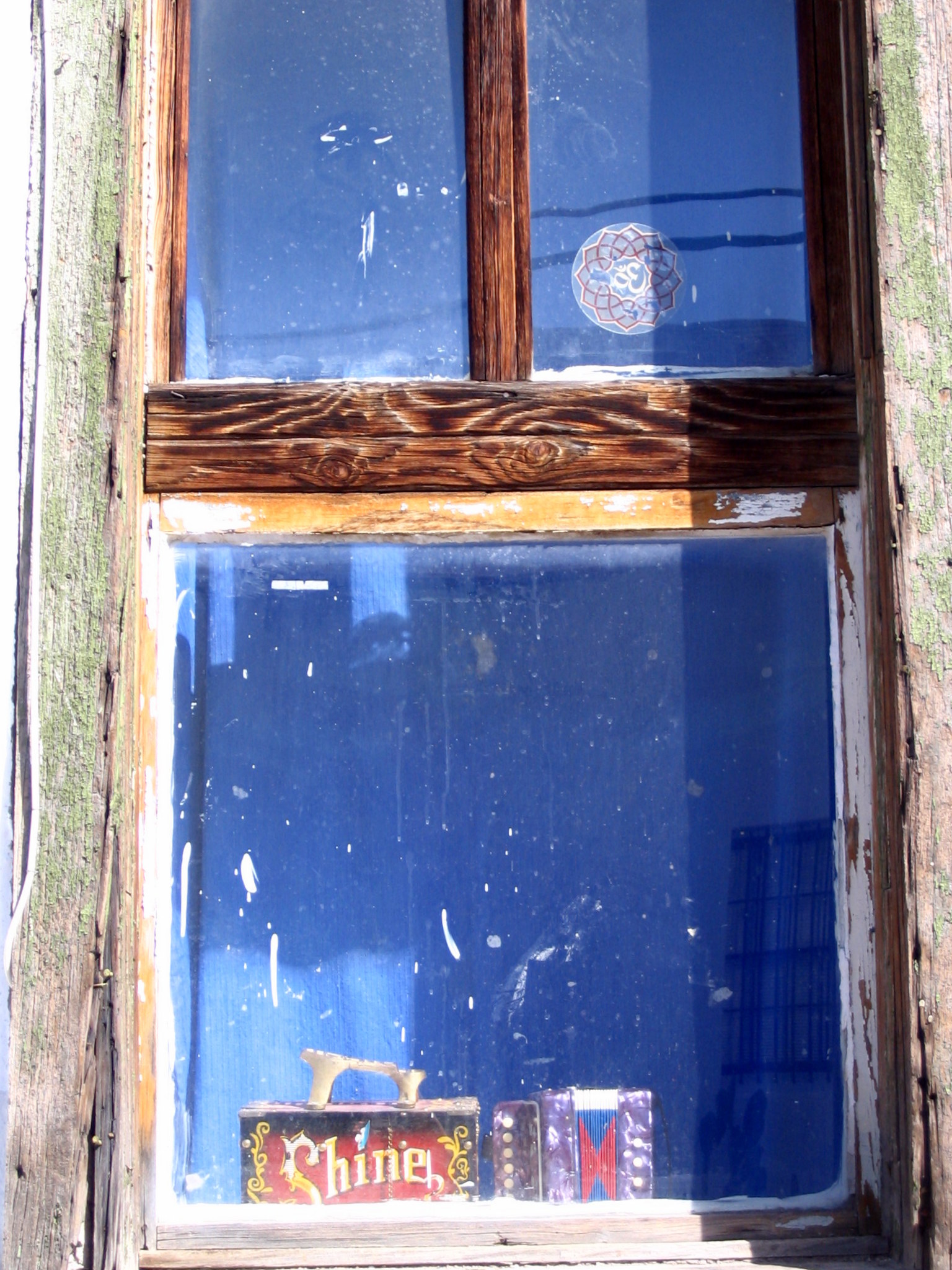
The other day I was reading a crime scene investigator’s textbook about stages of bodily decay, a process used in CSI to determine time of death. It made me think of wabisabi, the Japanese idea that decay is part of beauty. I found it hard to believe in wabisabi while picturing Norman Bates’ mummified mother, until I remembered a wabisabi fable that goes like this.

Once there was a monk-in-training who could not get his mind off a beautiful young woman. He thought about her day and night, and finally told his master, who ordered the young monk to go ahead and keep thinking about her day and night. That was a perfectly okay thing to do, as long as he meditated on how this woman would grow wizened and old, and then die and decay.
Through this meditation, the novice found out that every stage of her life is part of loving her and part of her beauty. Perfect wabisabi love is loving the imperfect. Very Zen, eh?
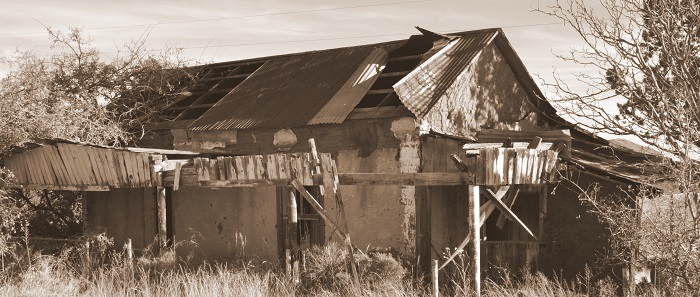
You as a human being are NEVER going to make anything that is perfect. Whatever you make is going to rot and decay and get left behind. Perfect art is imperfect. We are ourselves imperfect wabisabi beings.
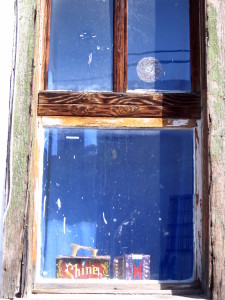
If beauty is in imperfection, you’ll see the most beauty if you look at the world in an earthy and authentic way. If everything around you is shiny-new and corporate, if you have fresh paint and plastic people everywhere, your world is hard and cold and ugly. You need wabisabi for balance.
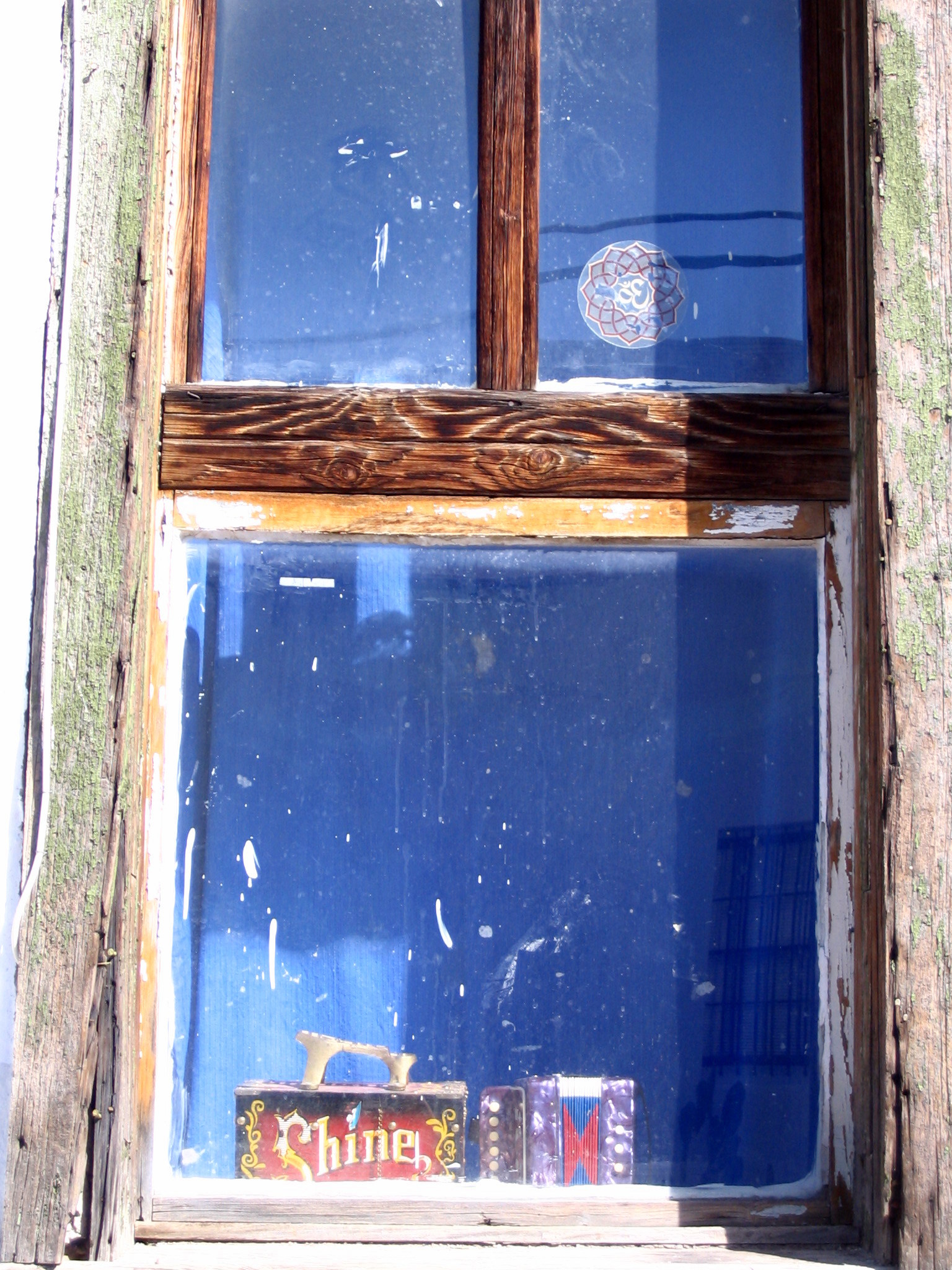
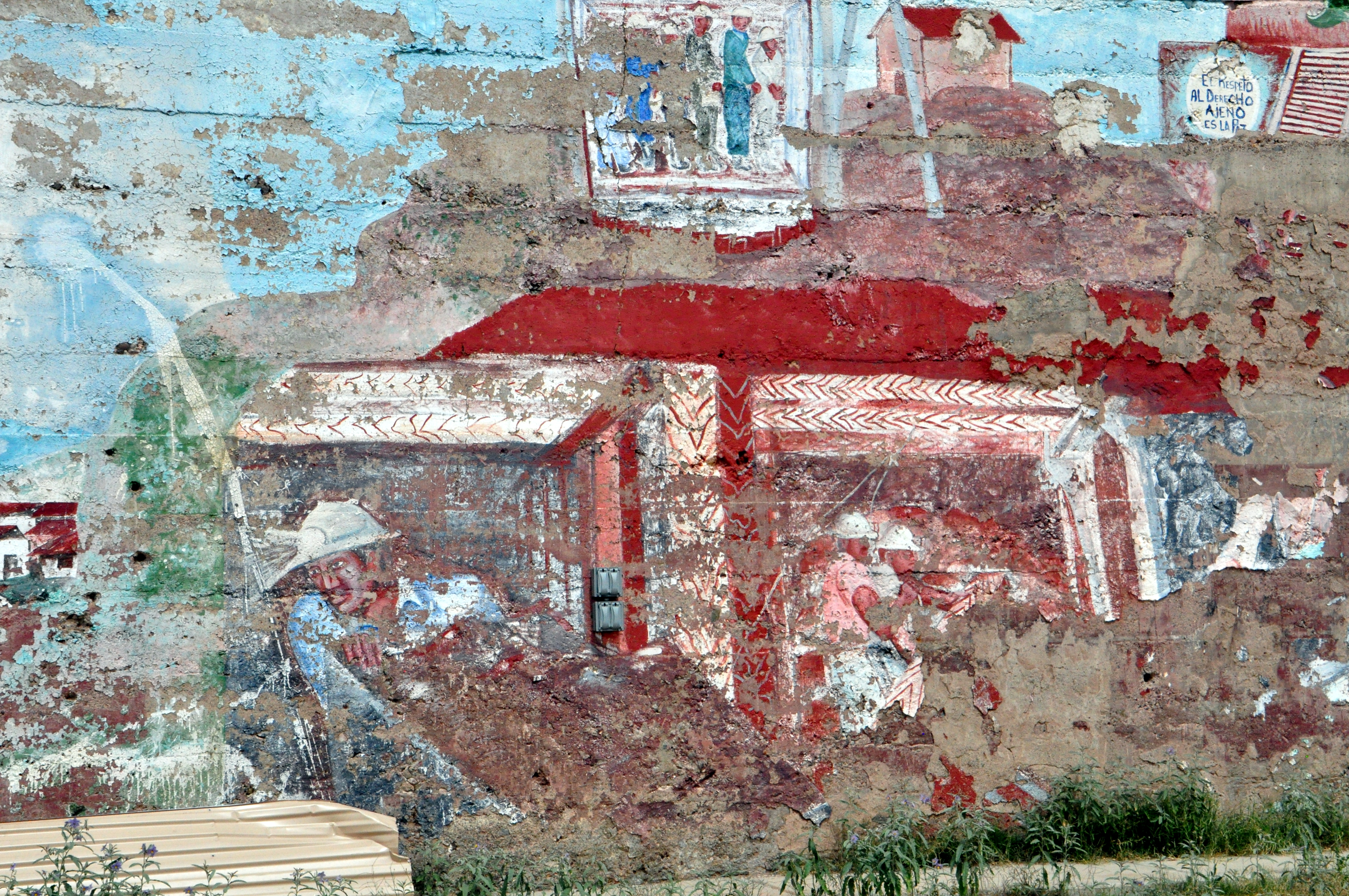
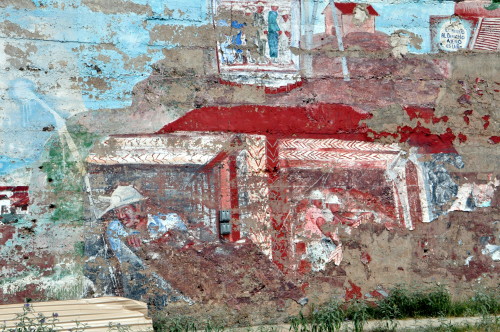
Then there’s the Sonoran desert where I live. The natives say nothing dies on the desert, and it’s true. The heat and low humidity means everything here lasts forever. Cars don’t rust, cattle skulls just lay there in the dust, and everything from rotting window sills to crumbling murals just hang around forever.
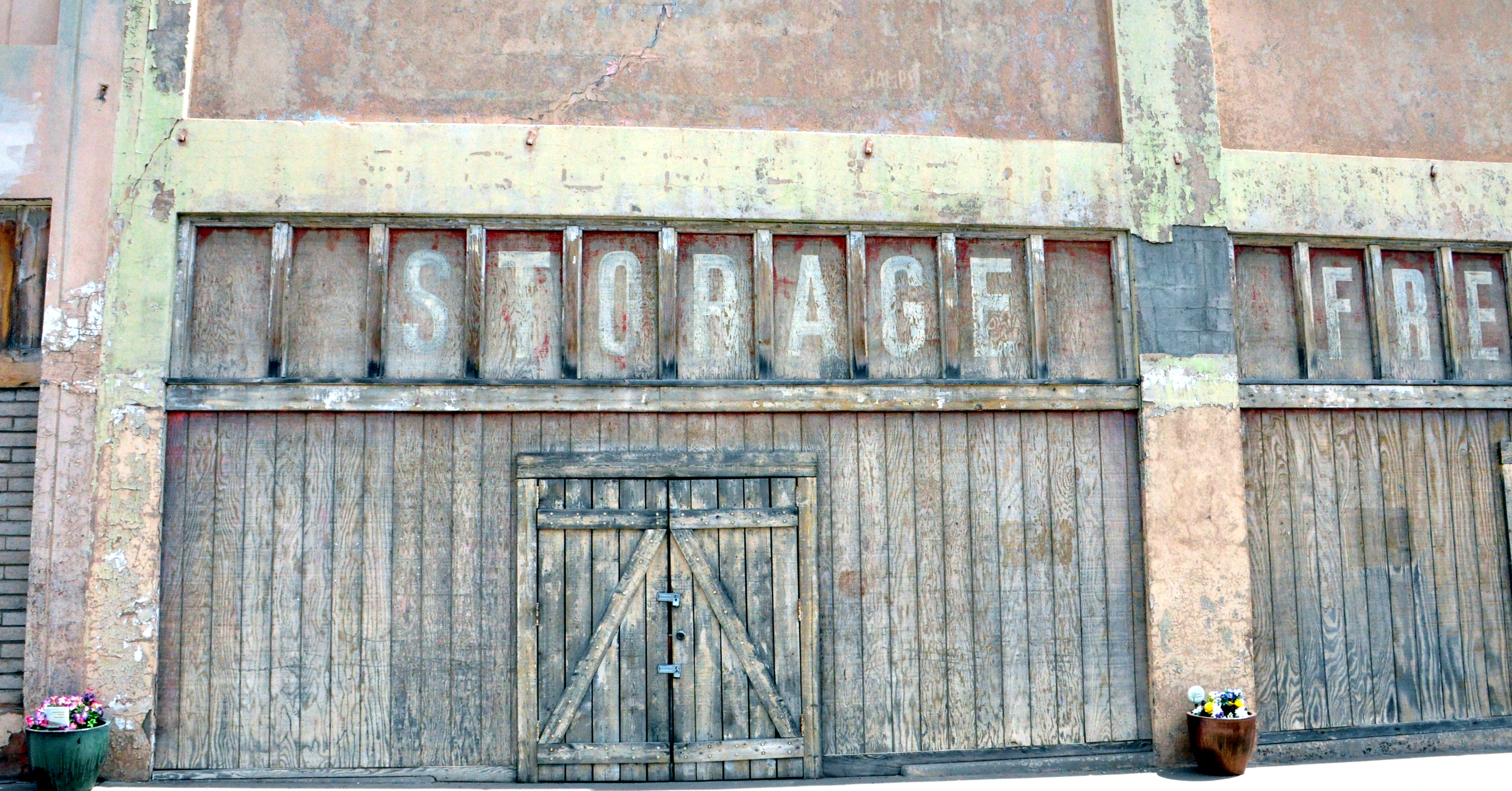
In fact, whole towns just lay there where people left them. We have one ghost town that still has a table with poker cards on it –left there a hundred years ago when the copper mine closed and all the cowboys and miners left town. The ramshackle remains of the town are wabisabi.
Wabisabi reminds us to seize this day and to be unafraid of what is ahead and changing. Wabisabi looks into forever and takes us there with it.
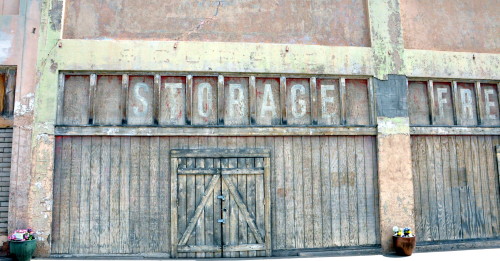
For more pictures of old mining towns, see Superior, Arizona Won’t Give Up the Ghost. 
Tags: wabisabi
by Jane St. Clair
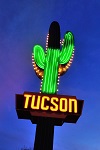
The New York Times recently sent a photographer and writer to do a piece on Tucson architecture. Most of us in Tucson do not even know we have architecture, much less that we are living an “unsung architectural oasis” in a “dusty outpost on the fringes of the Sonoran Desert.” See Unsung Oasis.
Now the fellows who came here from where cement grows instead of cactus did not even pick my favorite examples of Tucson architecture –the San Xavier Mission, the courthouse, the credit union at Wilmot and Speedway, and the Tucson Barrio.
San Xavier Mission was built by Spanish padres and Native Americans. As you
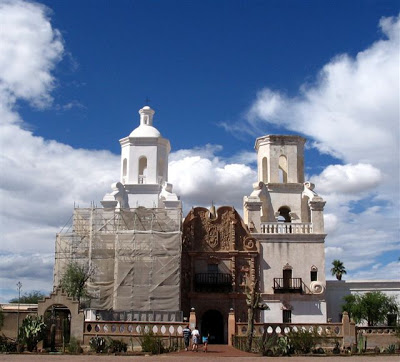
can see, our beautiful mission was never finished and one tower still needs to be topped off some 324 years later but then, things move more slowly out here compared to New York City.
The other building that I personally think is a great example of Tucson architecture is the Vantage West Credit Union on Wilmot and Speedway.
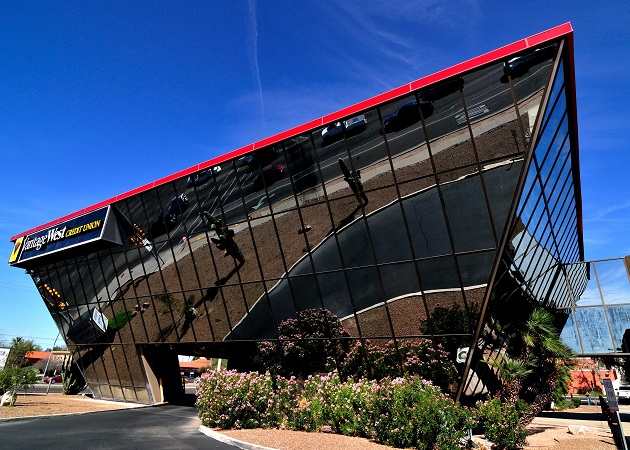
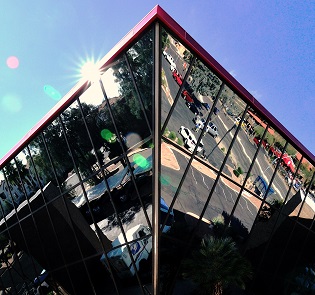
Every time I go by this building I’m tempted to hang from one of its corners and see if I can tilt it up and down.
It looks something like a gigantic boat made of mirrors.
A lot of buildings in Tucson can look church-y, including the old courthouse.
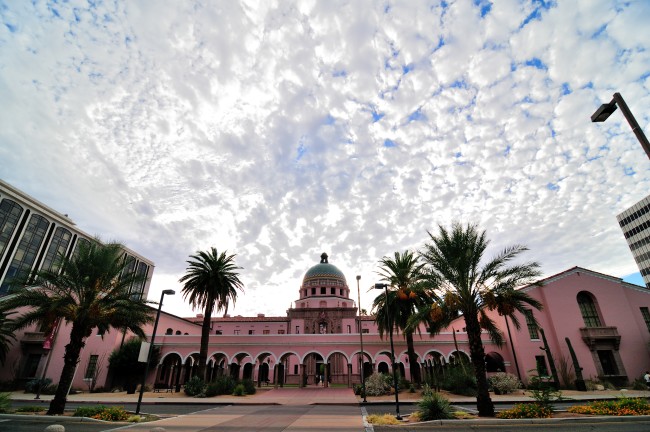
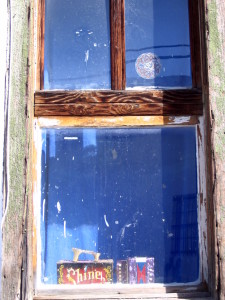
I love all the bright colors intrinsic to Tucson architecture. You can really see them in the Tucson Barrio around 100 South Stone Street near downtown. I really love the Barrio’s neat doorways and windows.

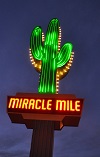
However, the New York Times writer mostly liked Tucson architecture because of Sunshine Mile. This is a stretch of 1950s buildings on Broadway between Euclid and Country Club. 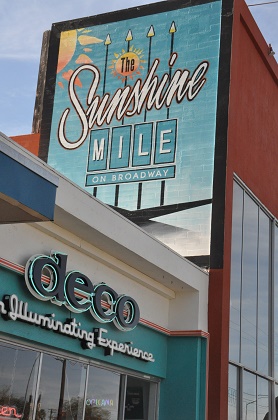
He may be on to something because when you walk along this street, you do feel as if you’re on the set of a Doris Day movie. The Times writer raved that “Tucson possesses some of the densest concentrations of mid-century Modernist architecture in the Southwest, although it’s hard to find.”
He means you have to find Sunshine Mile, for example.
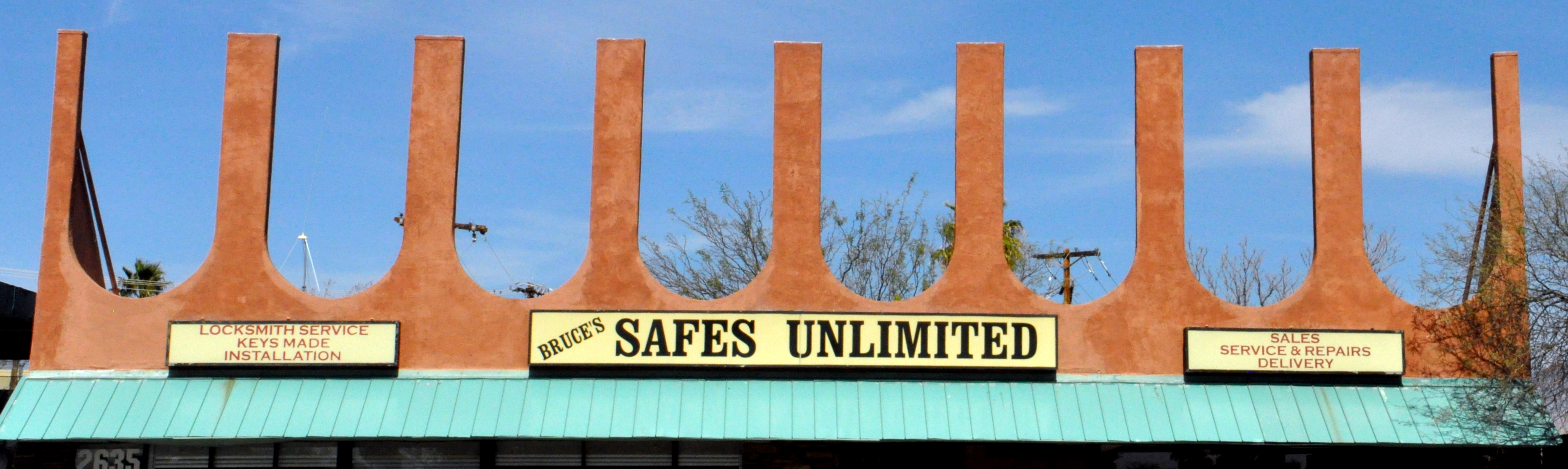
I like the Sunshine Mile building that looks as if it sprouts chimneys when no one is looking.
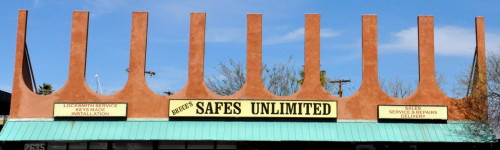
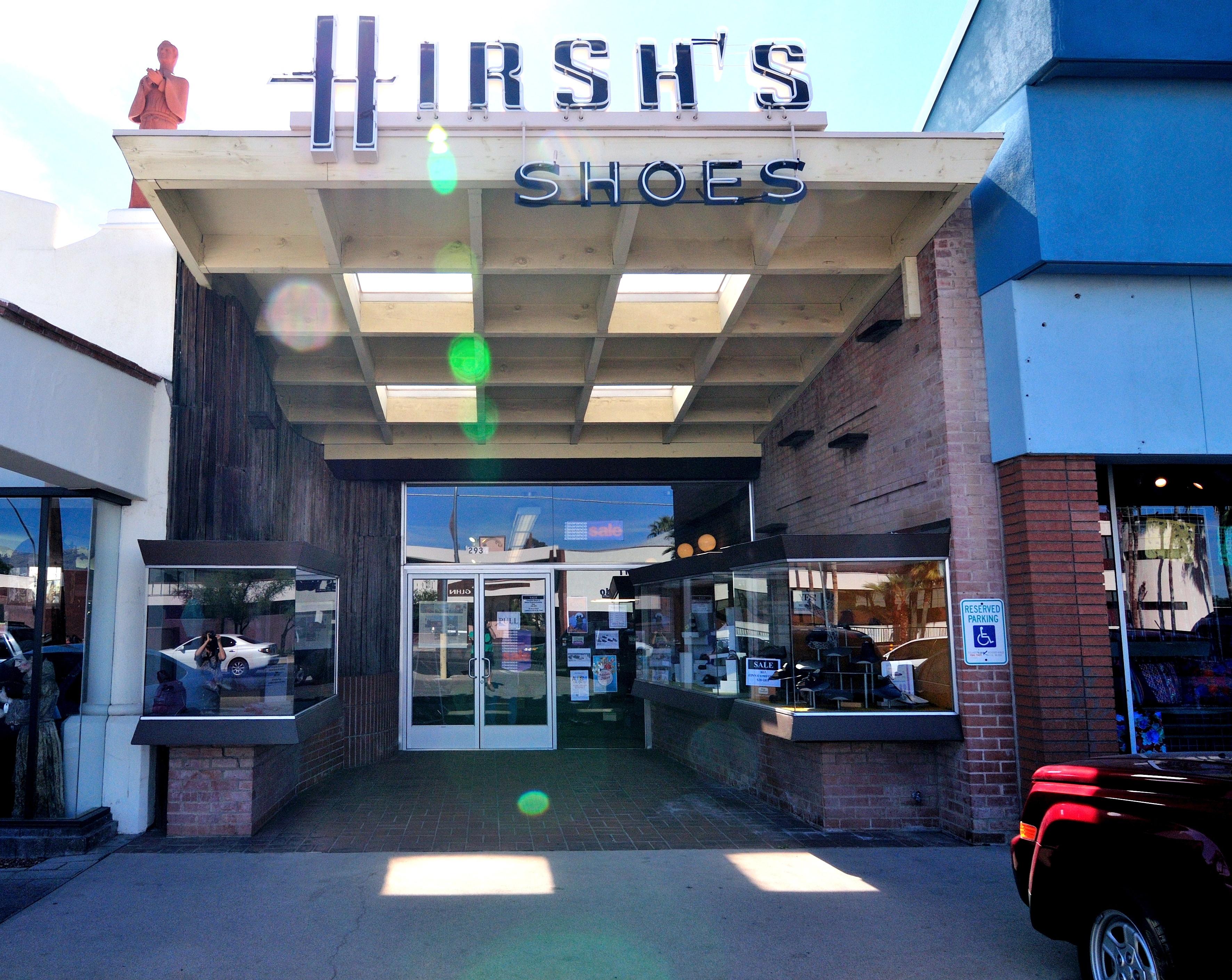
Hirsch’s Shoe Store from 1954 and the Top Hat building are particularly cute, though the Haas and Solot buildings are more famous.


The Times reporter also wrote how he liked how Tucson “boasts more about its thrift stores than its hipster brunch spots” and that he liked Tucson’s “dry clear air and abundant supply of wizened drifters right out of Richard Avedon’s ‘In the American West’ …
… and “how deeply he enjoyed the ramshackle dispersion of the city.”
Is that high praise or what?
On behalf of wizened drifters in ramshackle cities everywhere, I say, “Thanks, pardner. You’all come back real soon.”
Tags: Tucson Architecture
by Jane St. Clair
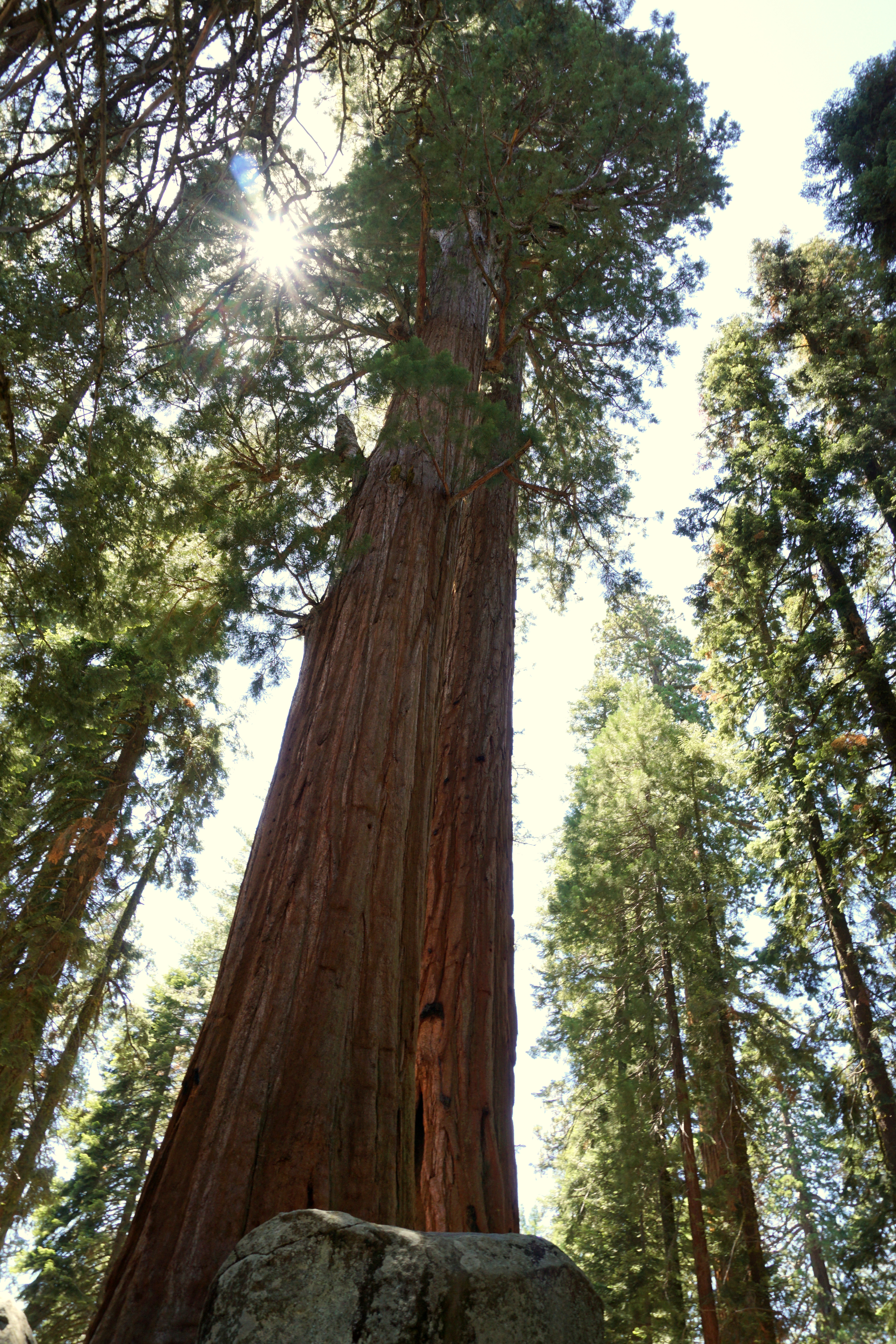
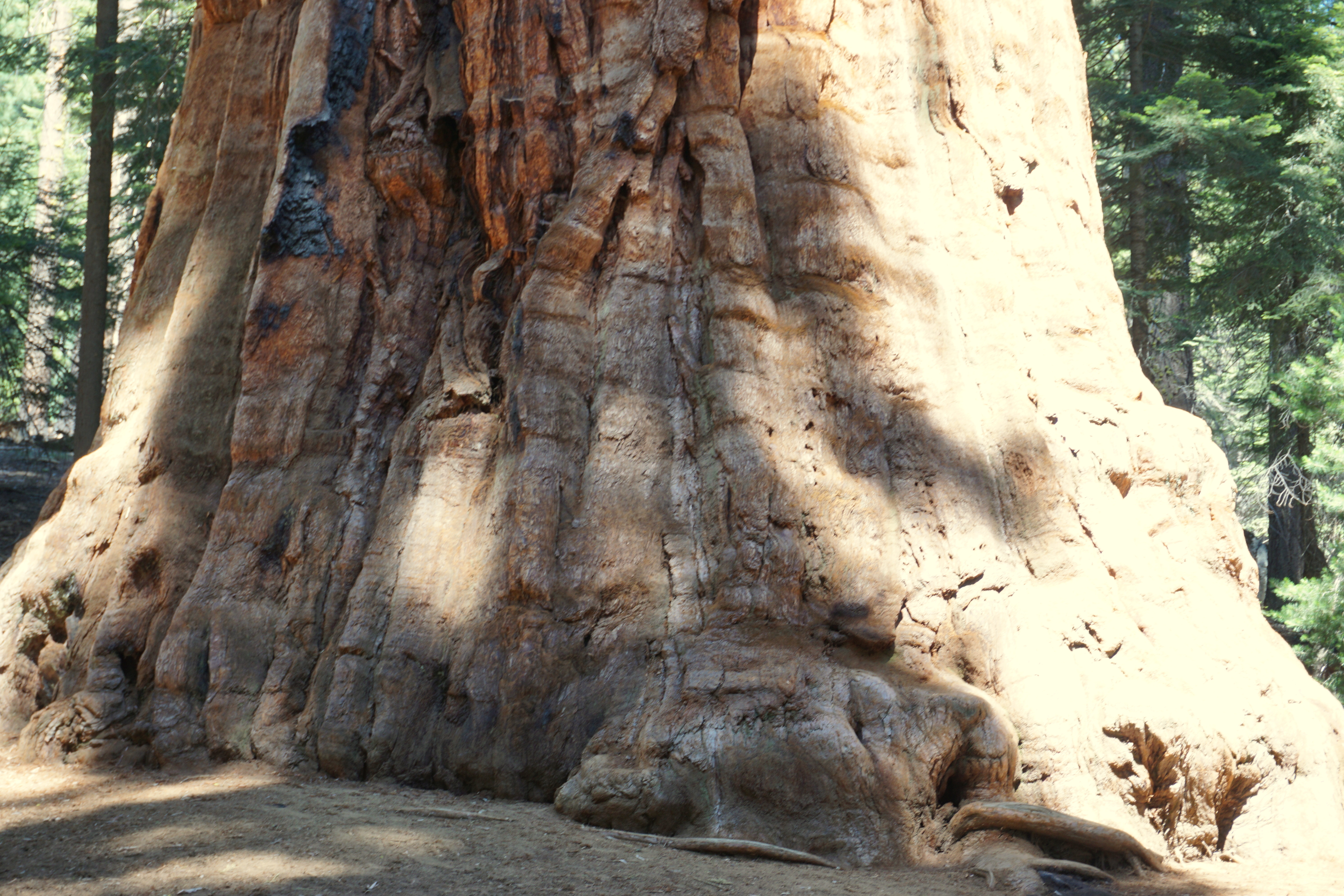
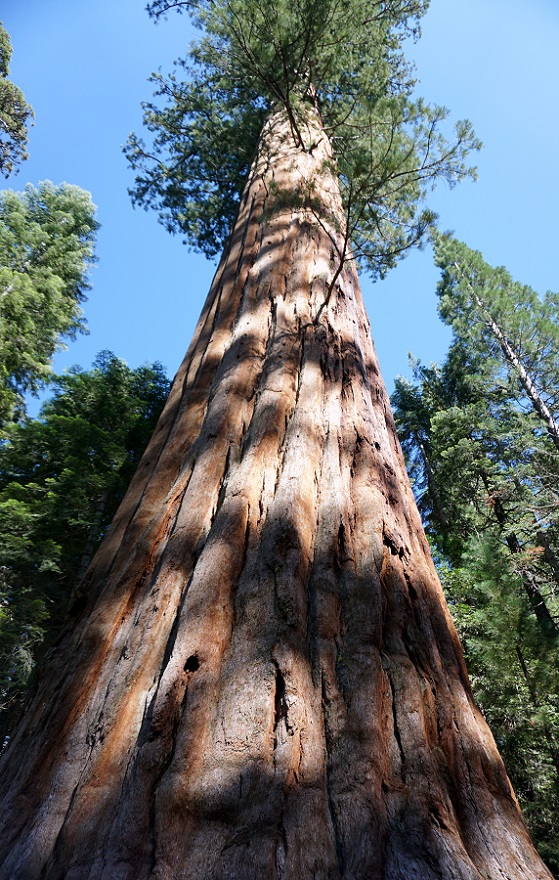
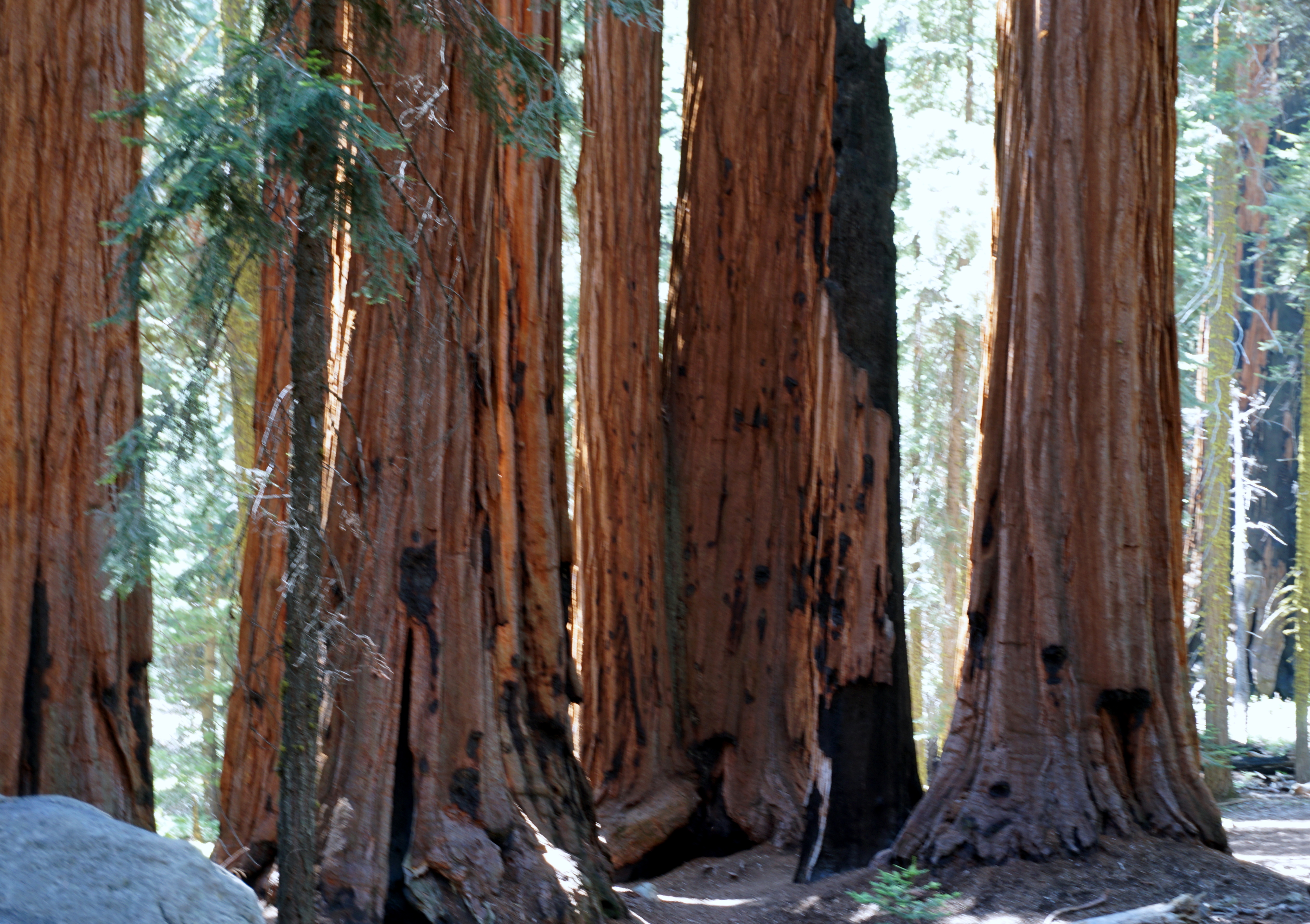
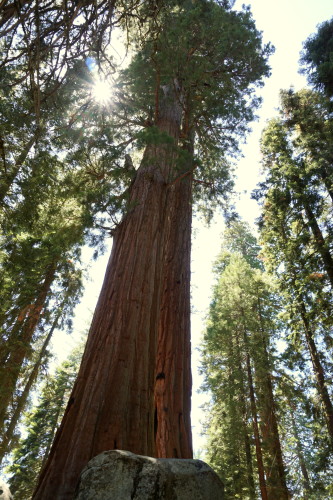
Sequoia trees are colossal beings and yet they have a softness about them. Their bark swirls in a deep red soft pattern, and even their leaves look soft and furry. You might expect a “don’t-mess-with-me” hostile energy from such giants — but instead their spirits are calm, peaceful and majestic. It’s as if these trees, the largest and oldest living things on earth, have nothing to prove to anyone. They seem completely happy. Their peaceful energy makes you feel as if you’re in a cathedral where only beauty, hope, joy and the celebration of all things great and wonderful takes place.
The main thing about sequoia is that they are tall. You look up and they are tall as far as your eyes can see. They also have gigantic widths. People use to drive their cars through certain of their trunks in the Sequoia National Forest until the park rangers became more ecologically-minded.
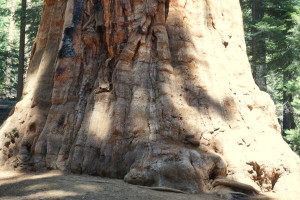
Sequoia have enormous feet. Their feet are so big that they look like dinosaur feet. Some sequoia have dark green feet, others have red.
The oldest sequoia are over 5,000 years old which means they were already 1500 years old when Moses was alive, and 3000 years old when Christ was born. The Sequoia forest has survived fire, drought, insect hordes, floods, avalanches, and even tourists.
I like what John Steinbeck wrote about sequoia:
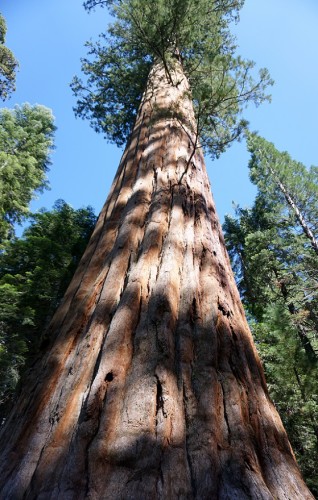
Redwoods seem to be out of time and out of our ordinary thinking. The redwoods, once seen, leave a mark or create a vision that stays with you always. No one has ever successfully painted or photographed a redwood tree. The feeling they produce is not transferable. From them comes silence and awe. It is not only their unbelievable stature, nor the color which shifts and varies under your eyes, –no—they are not like any trees we know. They are ambassadors from another time. The vainest and most irreverent of men goes under a spell of wonder and respect in the presence of the sequoia.
For information on your visit to the Sequoia National Forest this year, see Sequoia National Park.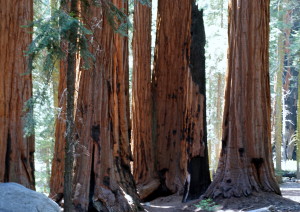
If you like nature essays about trees, try The Noble Saguaro and Me and In My Next Life I’ll be a Tree
Jane’s essay on Emily Dickinson placed in the 2015 Tom Howard/John H. Reid Essay Contest. See “The Colonel Catches A CatFish”. Read Jane’s funny flash fiction in The Reject File “Husky.” Jane’s story “The Man Who Liked 1959” placed in a contest from Twisted Road Publishing and will be included in a print anthology of stories from that publisher.
Tags: Jane St. Clair · nature essay
by Jane St. Clair
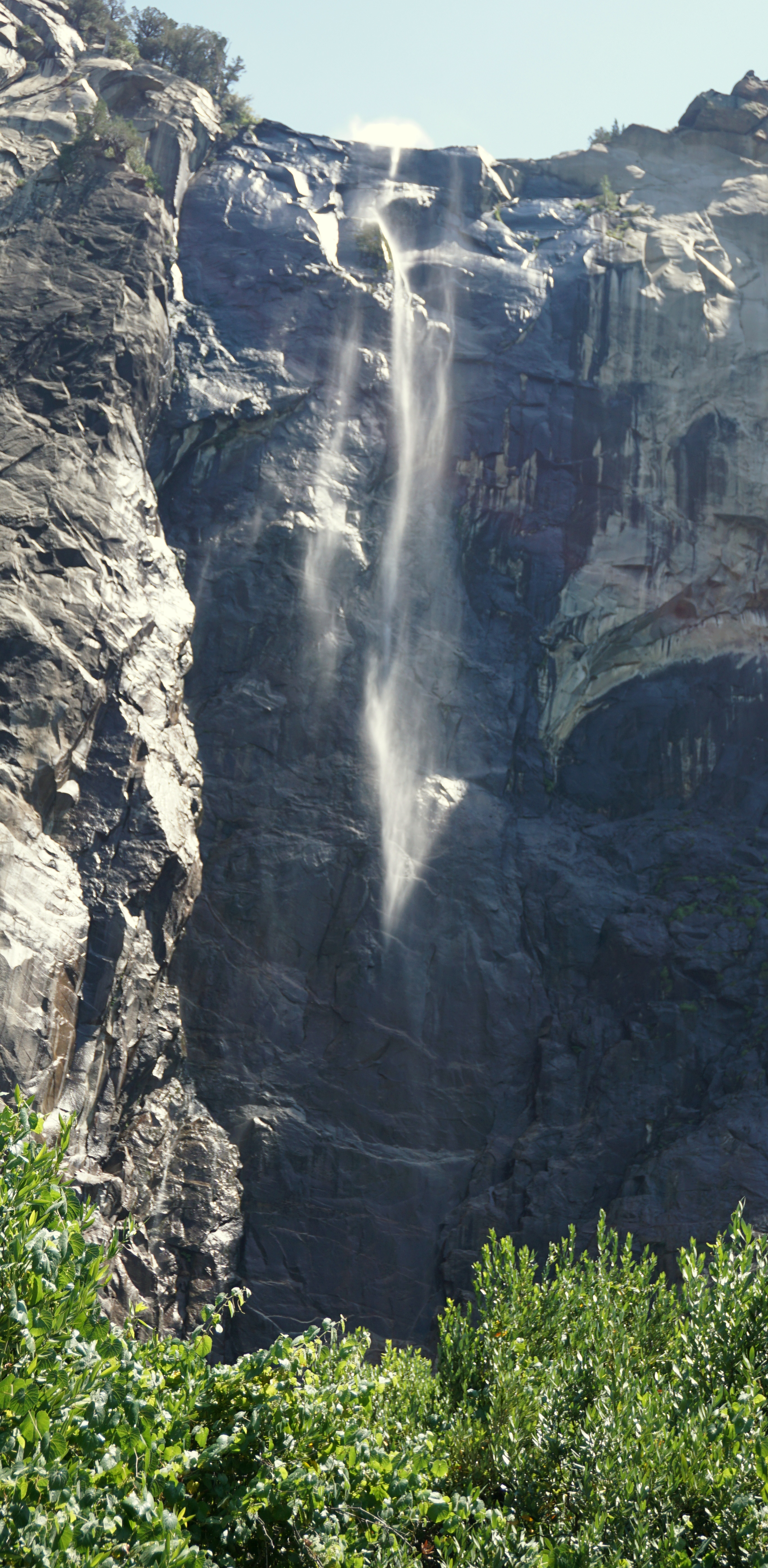
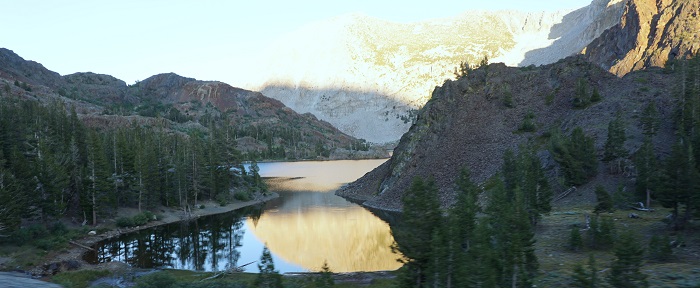
Yosemite National Park with its waterfalls and mountains and trees is the place where you stop wanting or needing anything more. It’s where you’re meant to be. When you’re in Yosemite, you keep looking up and wondering, “How can any place be so perfectly and elegantly beautiful?” … I’ve fallen in love with Yosemite National Park and the way John Muir writes about it.
Yosemite in the Words of John Muir
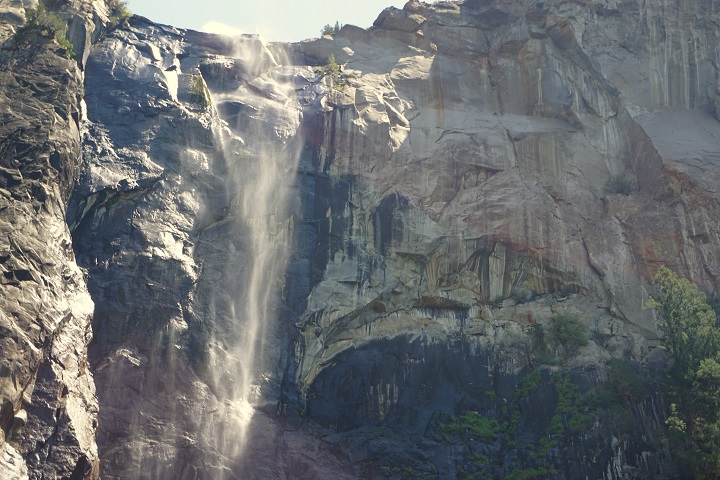
No temple made with hands can compare with Yosemite. Every rock in its walls seems to glow with life. Some lean back in majestic repose; others, absolutely sheer or nearly so for thousands of feet, advance beyond their companions in thoughtful attitudes, giving welcome to storms and calms alike, seemingly aware, yet heedless, of everything going on about them. Awful in stern, immovable majesty, how softly these rocks are adorned.
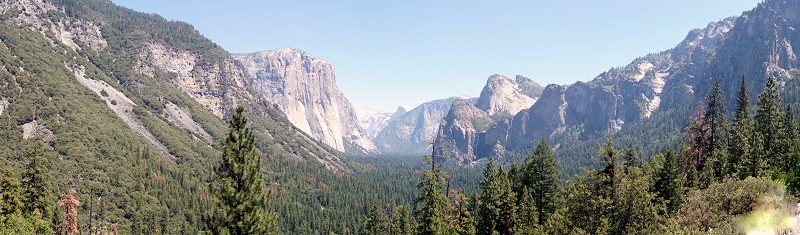
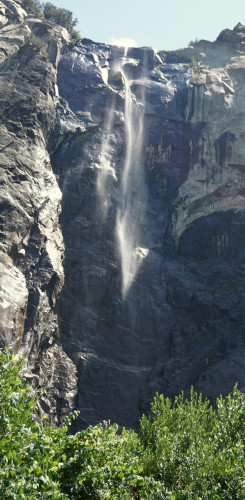
Here stands Nature’s cathedrals, hewn from the living rock, almost conventional in form, nobly adorned with spires and pinnacles, thrilling under floods of sunshine as if alive like a grove-temple …
No where will you see the majestic operations of Nature more clearly revealed beside the frailest, most gentle and peaceful things than in Yosemite.
Nearly all Yosemite is a profound solitude. Yet it is full of charming company, full of God’s thoughts,a place of peace and safety amid the most exalted grandeur and eager enthusiastic action, a new song, a place of beginning abounding in the first lessons of life, mountain-building,
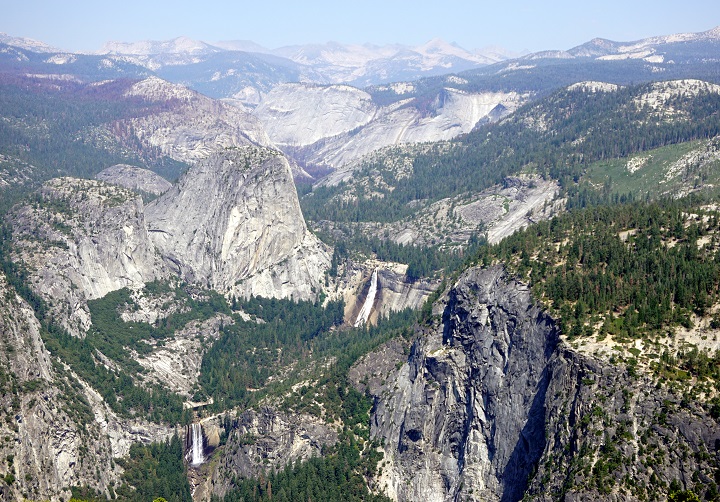
eternal, invincible, unbreakable order, with sermons in stones, storms, trees, flowers and animals brimful of humanity.
The sublime rocks were trembling with the tones of the mighty chanting congregation of waters gathered from all the mountains round about, making music that might draw angels out of heaven … 
This was the most sublime waterfall flood I ever saw — clouds, winds, rocks, waters, throbbing together as one. … In Hetch Hetchy Valley and the great King’s River Yosemite, thousands of rejoicing flood waterfalls were charging together in jubilee dress. And the winds were singing in wild accord, playing on every tree and rock, surging against the huge brows and domes and outstanding battlements …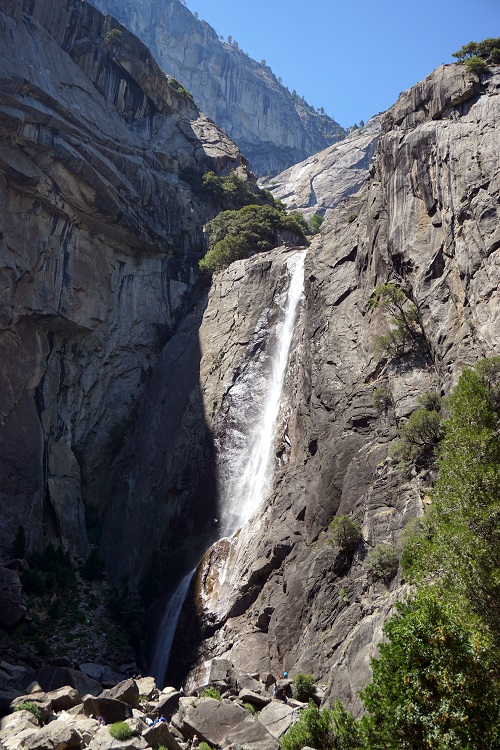
As long as I live, I’ll hear waterfalls and birds and winds sing. I’ll interpret the rocks, learn the language of flood, storm, and the avalanche. I’ll acquaint myself with the glaciers and wild gardens, and get as near the heart of the world as I can.
Jane’s essay on Emily Dickinson placed in the 2015 Tom Howard/John H. Reid Essay Contest. See The Colonel Catches A CatFish
Read Jane’s funny flash fiction “Husky” The Reject Pile
Tags: Jane St. Clair · National Parks · nature essay
by Jane St. Clair
An architect once told me that when you design a building, you think in terms of the perfect size –and the perfect size is you! You’re the perfect size! Anything taller than you looks high, and anything shorter looks low.
I remembered that saying the last time I saw the Grand Canyon. If I’m the perfect size, then the Grand Canyon is WAY BIG.
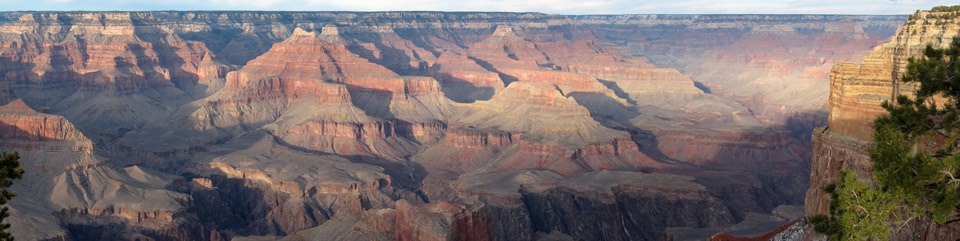
How big is the Grand Canyon? 277 miles long, 18 miles wide and one mile deep.
As Bill Bryson said, You could set the Empire State Building down in it and still be thousands of feet above it — indeed, you could set the whole of Manhattan down inside it! The Grand Canyon is WAY BIG.
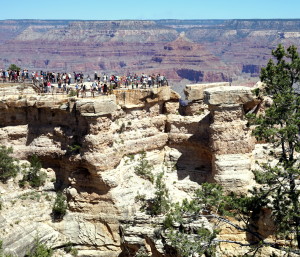
Even when you suspect it’s just a few more steps in front of you, the Grand Canyon always surprises you. It’s unexpected. You just don’t expect to see a gigantic gash stretching for so very long and cutting so very deep into the earth. If you stand on the canyon’s ledge, the Colorado River looks like a tiny little stream, and you can’t even see the hikers below, much less coyotes. It’s like a mountain in reverse — a mountain that left the earth and left a hole.
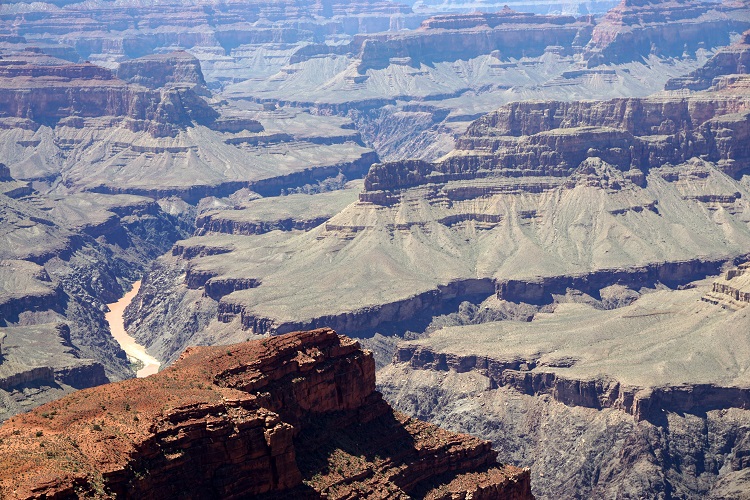
It’s the “Oh Wow” moment, and it’s very quiet. The Grand Canyon is a silent place, a place with very little movement, except for the occasional raven who sky-dances with the Canyon’s strange wind tunnels. The colors of the Grand Canyon are quiet too, nothing gaudy, just pastels in purple, russet red, browns, and greens.
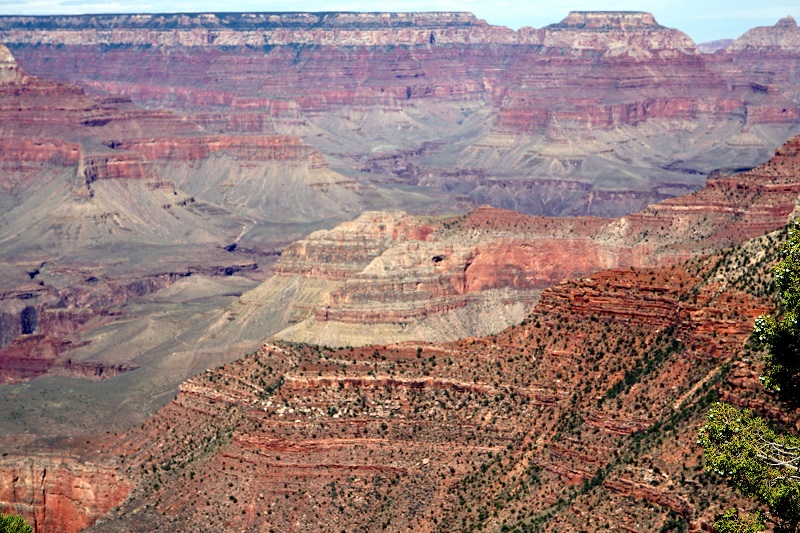
The Canyon has amazing colored layers that are perfectly horizontal — the whole panorama is a series of beautiful horizontals — all done in perfectly straight lines because water formed them, and water never lays crooked. The Grand Canyon is perfectly formed.
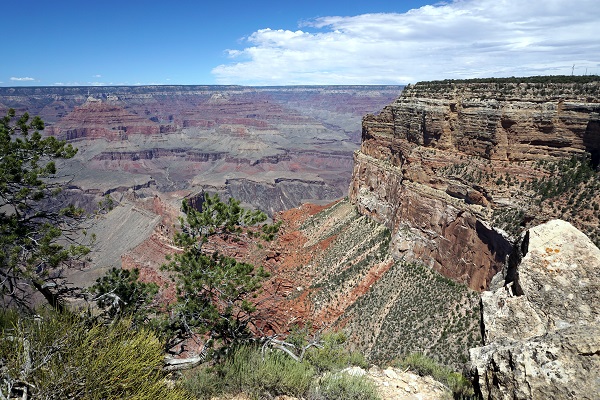
J.B. Priestly said you feel when you are there that God gave the Colorado River its instructions. The Canyon is all Beethoven’s nine symphonies in stone and magic light.
 The Native Americans called the Grand Canyon by the name “Ongtupqa,” and they made pilgrimages to it as a holy place. It is a holy place, a place to experience transcendence and meaningfulness.
John Muir, an American hero who helped create our National Park System, said, “The Canyon seems like a gigantic statement for even Nature to make all in one mighty stone work. Wildness so Godful, cosmic, primeval, bestows a new sense of earth’s beauty and size. But the colors, the living, rejoicing colors, are chanting morning and evening in chorus to heaven!”
Amen, Brother Muir.
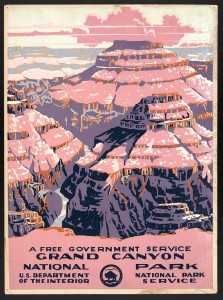
For information on how to become one of the five million people who visit the Grand Canyon this year, see The Grand Canyon National Park.
Tags: Arizona · Arizona photography · Jane St. Clair · National Parks · nature essay
by Jane St. Clair
Death Valley has this bad-ass reputation. The Hottest. The Driest. The Lowest spot in North America. It’s got Hells Gate and Furnace Creek. As you drive toward Death Valley, signs warn you — “Extreme Heat” … “No gasoline for miles” … “You don’t want to go there” … “Are you crazy? Go home already.”
Abandon all hope all ye who enter here.
Its roads seem to go on and on to nowhere.
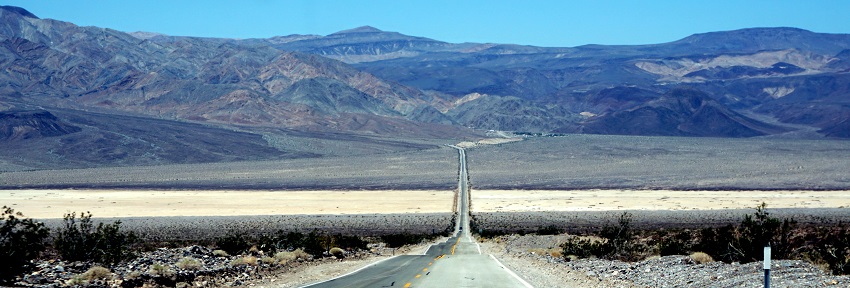
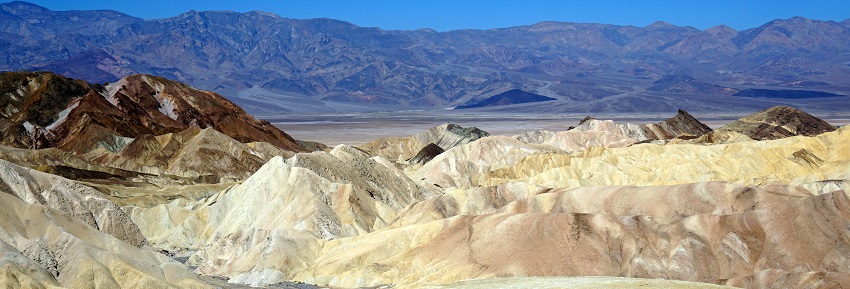
And yet Death Valley is eerily beautiful in its own way with its amazing rocks in strange formations you won’t see anywhere else. The Native Americans in Arizona say that every rock as well as every plant, animal and human has its own Kachina or spirit. I finally understood what they mean by Rock Kachinas for the first time in Death Valley.
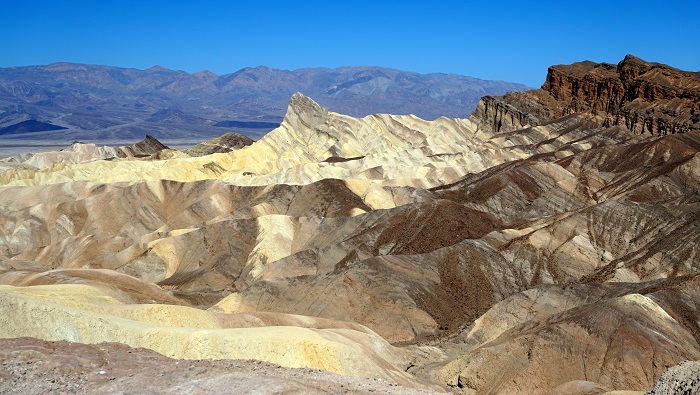 At Zabriskie Point you can look up and see these bizarre white rocks, so white in the noon August heat that they blind your eyes. One rock shaped like a majestic white shark sails forward into the sky —
while others knoll and fold and peak like folds of luxurious cloth to form a beautiful three-dimensional abstract work of art.
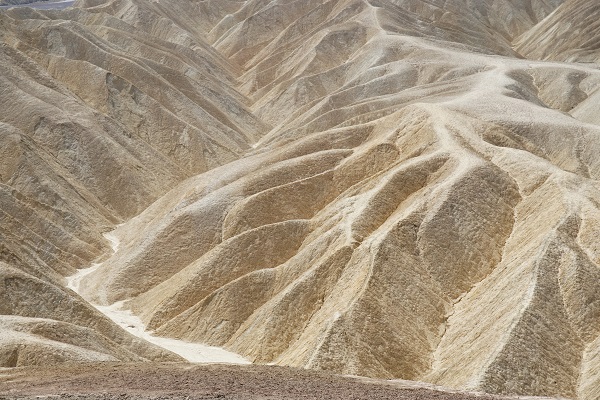
This strange foreboding place lets you see for miles and miles and reminds you that the space between things is just as important as the things themselves —
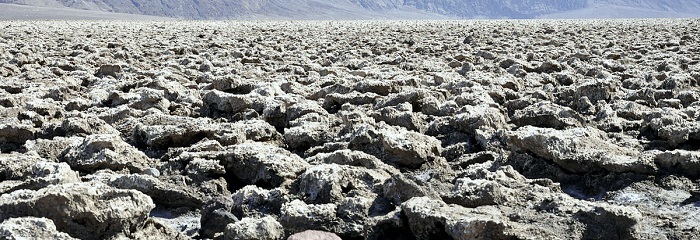
–and that a simple substance like salt can be very beautiful.

Death Valley is home to a thousand species of plants and a thousand kinds of animals, but on that soundless still day in summer when I went there, I heard no birds singing or animals burrowing or leaves rustling or any of that. I wondered how this expanse of whiteness could provide cover for coyote or puma — two of the creatures that call this place home.
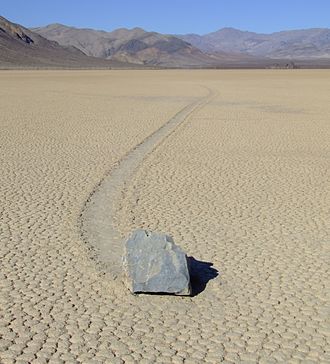 If anything, Death Valley has a spooky quality where unexplained events occur — such as rocks that slide by themselves, perhaps propelled by poltergeists.
And yet despite the spectral qualities and loneliness of this landscape, I think I would go there again and I think I could learn to love this fearful and fierce place, and to agree with the seeker who said, “How can we feel so much fear in the face of these rocks and mountains when they are at once so wonderful?”
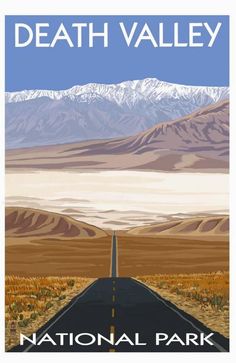
For more information on visiting Death Valley National Park in California, see Death Valley National Park
Updates: Carbon Culture Review has a terrific issue on the intersection of technology, art and literature– Read Jane’s piece ScreenBytes
Wising Up Press has just published a new book about relationships between brothers and sisters – Jane’s piece “Talking Berkeley Down” is included. See SIBLINGS: Our First Macrocosm
Read Jane’s funny flash fiction “Husky” The Reject Pile
Tags: Jane St. Clair · nature essay
by Jane St. Clair
I was only in Tucson a few months when I heard the horrible story of the oleander and Boy Scouts. Now this story is not for anyone who gets scared easily! So if that means you, you better stop reading right this minute!
The story goes like this:
About twenty years ago, a troop of Tucson Boy Scouts was camping on Mount Lemmon.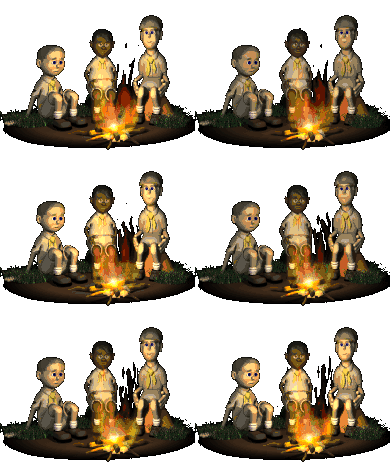 It was summer, and the Scouts like everyone else in Tucson had climbed up the mountain to escape the heat.
Night was beginning to fall. The Scouts pitched their tents and built a campfire. They broke off sticks from oleander and Boy Scouts made them into skewers to roast hot dogs.
The next morning EVERY SINGLE BOY SCOUT WAS DEAD!

Some died from eating the wieners, and others died from just inhaling the smoke of burning oleander.
OLEANDER is that POISONOUS!
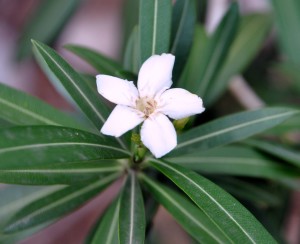
If you touch it, YOU DIE. But these city slicker Boy Scouts were from New York or some such place and did not know any better.
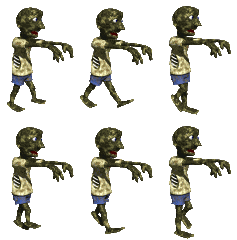
DON’T EVER TOUCH OLEANDER! or else!
The only problem is oleander grows all over the parts of Arizona where people live. The plant grows tall –up to 20 feet– and it’s big and green and full of flowers. It’s not picky about heat and water in a land of lots of heat and no water, and in a land with no big green plants full of flowers.
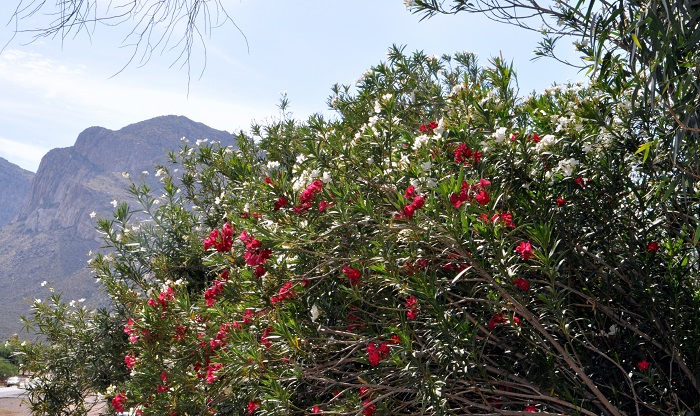
This means is … OLEANDER IS EVERYWHERE! …. YIKES!
This week I tried to find the oleander and Boy Scouts story in old newspapers. I couldn’t find it. That bothered me because by now I’d heard this story many times. Storytellers always tell it with great drama and a catch in their voices.
The thing is the story of the oleander and Boy Scouts is not true. It’s urban legend, 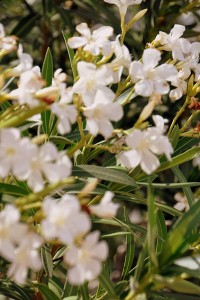 even though people tell it not only in Arizona, but also in California, Texas, New Mexico, Arkansas, Asia, the Mediterranean and anywhere that oleander grows.
The story probably dates back to a troop of French soldiers wandering around Spain during the Peninsula War of 1809. They were stealing food and camping near Madrid when they used oleander sticks to roast raw meat. The next morning 12 were dead, and 5 were deathly sick.
The oleander and Boy Scout story has staying power because its warning serves a purpose. Oleander is poison. It only takes an ounce of its leaves to kill a horse, and even less to kill a child.
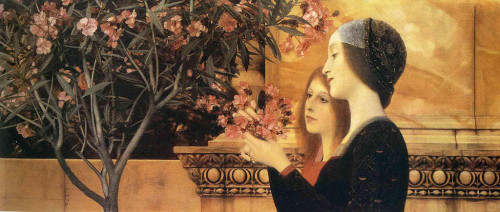
I did find a 2007 article from a newspaper in Yorba Linda, California. The city fathers were deciding whether to ban oleander because of its threat to horses. I got a kick out of a comment someone posted at the end:
“Do you remember the horrible incident in California years ago (actually, about 20 years ago) where a group of Boy Scouts used oleander twigs to grill hotdogs and marshmallows over a campfire? Several of the boys and one of the Scoutmasters died as a result. I would never plant oleander. It’s a beautiful plant, but it is really, really toxic.”

For more information on oleander and Boy Scouts, try snopes.com
July 2015: Read Jane’s funny flash fiction “Husky” The Reject Pile
Tags: Arizona · Jane St. Clair · Tucson · Uncategorized


 Albert Einstein wrote, “The most incomprehensible thing about the universe is that we can comprehend the universe.” I think he meant we can understand physics in terms of numbers and formulas and pi’s written in white chalk marks on never-ending blackboards. But what is just amazing to me is that we can understand and relate to strange creatures like Great Horned Owls in the way all living things understand one another, even though our lives are quite different.